By Hemang Yadav
Playwright, dramaturg, director, and theatre practitioner based in Singapore
Soumee De’s exquisite dance drama River Ramble is characterised by an overdetermined overflow of water’s significance. The synapse is a river too, and Soumee’s presentation made so many connections in this reviewer’s mind that writing this review truly became a daunting task. It is nonetheless a task of pleasure, as I feebly attempt to discuss concisely the meaningful rambles that the show took through history, philosophy, economy, culture, geography, environmental science and, not unexpectedly, human emotions and frailty.
Produced by the dance collective ETHOS, River Ramble was presented in the form of five episodes, and the first episode clearly signalled the confluence of poetry and dance in this performance, in the form of a chant. Though rendered in English, the chant felt like a mantra, managing thus to be both a traditional as well as an innovative beginning to an Indian dance performance. The chant personified the Singapore River as a ‘giver’ – hence a woman, a mother, a goddess. This very Indian treatment of a river, seeing in her the divine feminine, rather than a mere resource to be used, dominated and forgotten, showcased from the get-go the marriage of an Indian artform and a Singaporean story. The chant goes ‘I am no stranger to you’, and in a beautifully uncanny way, the Odissi dance form and the Indian metaphorical culture were made familiar, and particularly apt in telling the story of Singapore, and the river who was once her life blood.
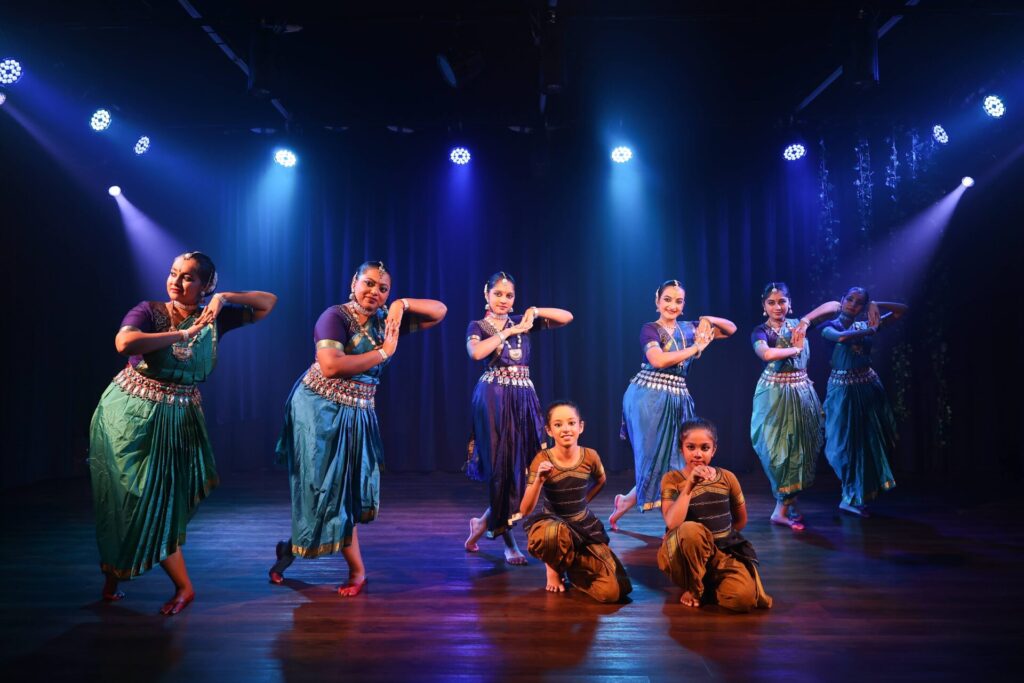
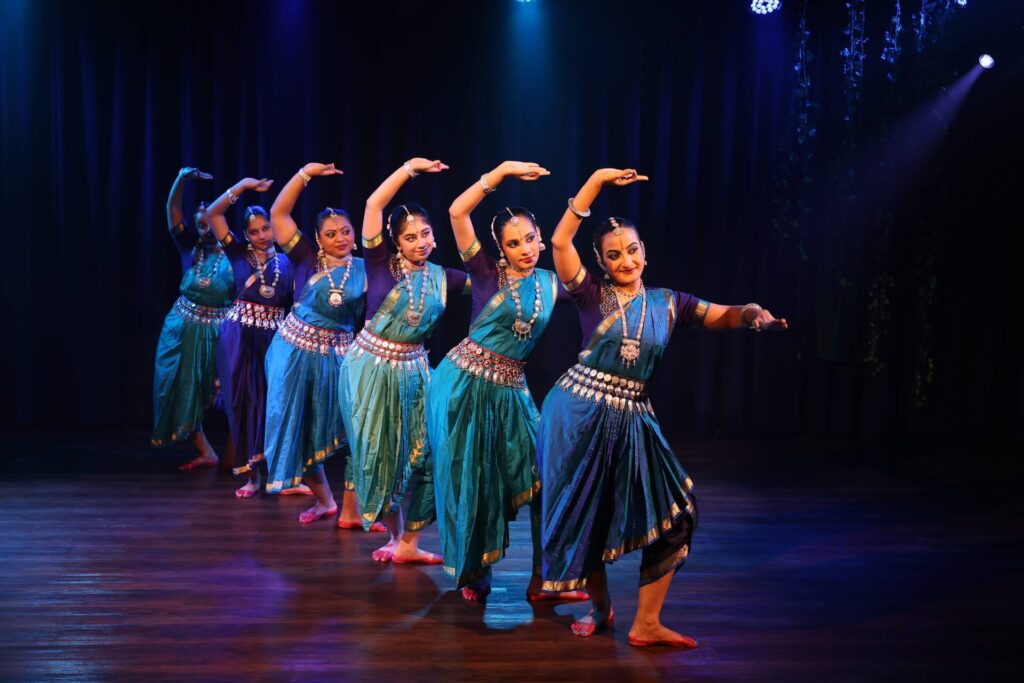
We continue to be pulled into this familiarity with the following episode, the Megh Pallavi or Cloud Elaboration. This conventional element of an Odissi dance performance was transmuted into a semi-realistic theatrical experience, as mudras, facial expression, graceful tilts of the head and glances that drop like the Ganges from heaven to earth immersed the viewers in the universal encounter of rain. It was really a revelation that a presentational artform like dance could be so representational. The sheer beauty of this episode and the way it made the immediacy of water so visceral will stay with me for a long time. What bliss is the feel of rain on the skin, and how much do we, the overworked urban mallrats of today need this reminder! One of the dancers, Gomathy Chandrasegaran, was so involved in this moment of joy that her eyes brimmed over, and by osmosis mine did too. This spontaneous unplanned moment made the significance of water flow from the outside to the inside, from the natural to the emotional, suddenly binding humanity inextricably to nature.
Episode Three largely used the poems from Roger Vaughan Jenkins’s From the Belly of the Carp, a seminal work, one could even say epic, that uses verse to describe the many scenes along the Singapore River in the course of Singapore’s history. Jenkins won the Singapore Literature Prize in 1995 for this work, and surely a performance about the Singapore River would have been incomplete without it! The audience was treated to vignettes from the olden days by the riverside, all presented through the medium of Odissi dance. Possibly the liveliest moment in the entire performance was the euphoric entrance of two child dancers as otters! Forgive my dad joke as I affirm that the otters were otterly awesome, especially in the way they interrupted the orderliness of the dance performance with a wild raw energy that nonetheless kept to the dance aesthetic, a creative chaos, teaching what was for me a valuable lesson in assimilation. Watching their energetic antics made me think of the many occasions when locals had been horrified by the presence of otters in public spaces and had been quick to find ways to drive them out. We never pause to think that if they are encroaching on our space, it is because our urban development has been encroaching on theirs. Who says they have no right to the space we inhabit, that they only deserve to be in enclosures in the zoo for our viewing pleasure? The rumbunctious rambles of the two child dancers reminded us that once we too lived in harmony with the rest of creation, and how delightful that co-existence was. In a country that promotes racial harmony, can we also find a way to celebrate the harmony of all living beings? Loka samastha sukhino bhavantu? While the human world seems determined to tear apart with racial and sectarian violence, this brief moment of unity between the human and non-human domains was particularly precious.
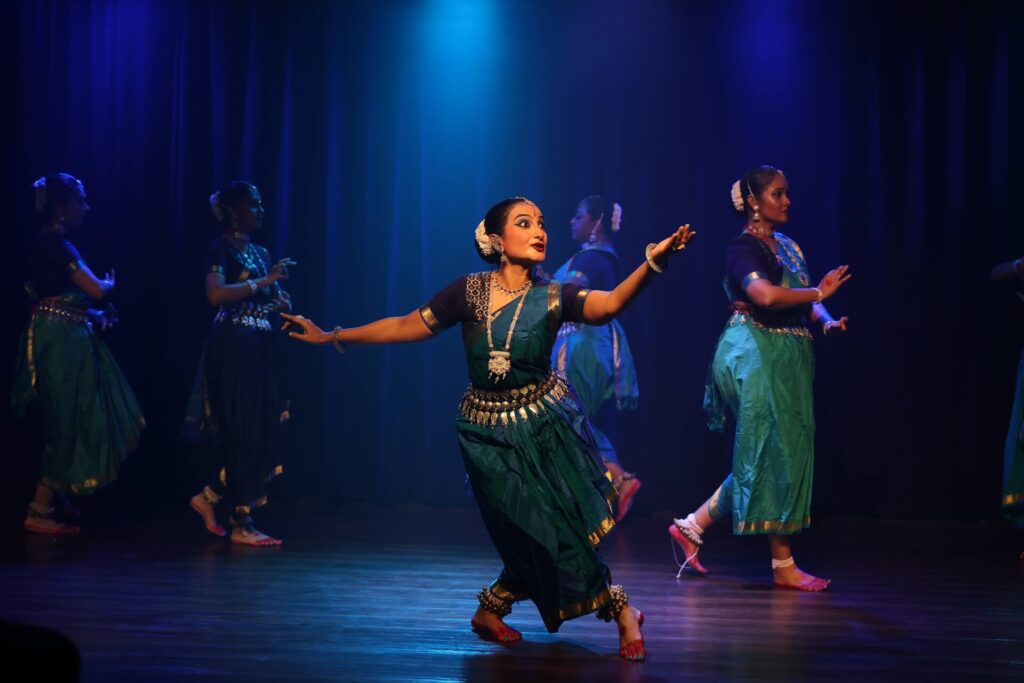
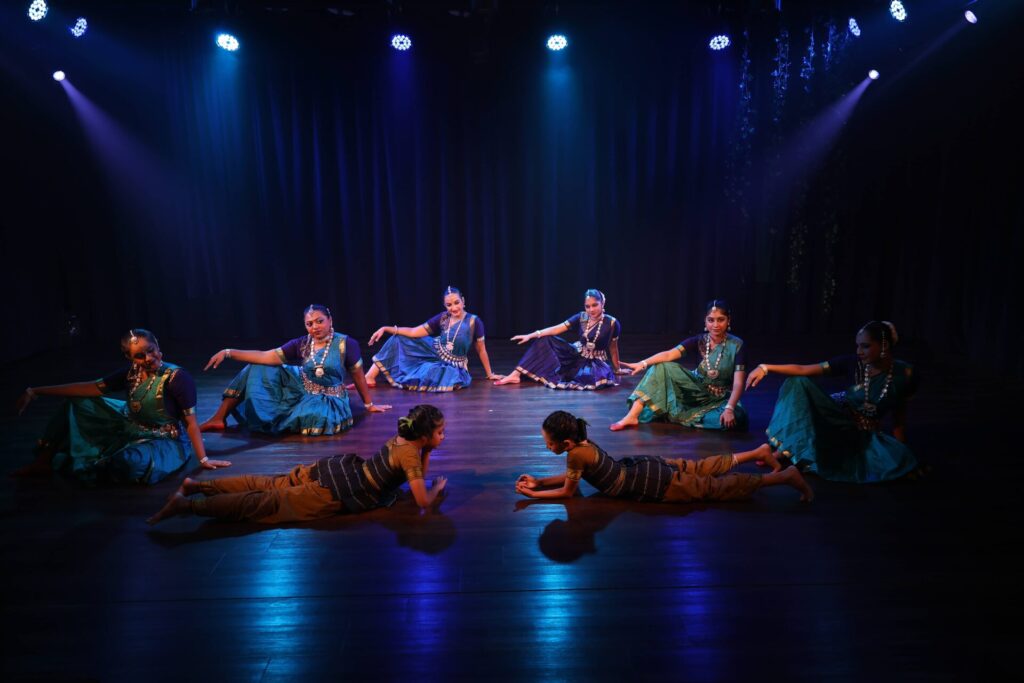
Jenkins gave voice to three figures from history and this theatrical episode revitalized them on the stage – Shu Mei a prostitute, Ramesh S/o Pramatiwan a dhoby washerman and Ong Kew Ho a merchant. This deliberate ordering of the three narratives was interesting for me, as Soumee had made the deliberate choice to prioritize the narratives of the marginalized over those who had always been mainstream (pun intended). Soumee presented the heart-wrenching story of Shu Mei, sold to a brothel by her family during a famine and after a hard life, winding up stabbed to death by a drug-crazed client. Her choice of presenting this without dance, just as a straight narration, trusting solely in Jenkins’s words and the power of the narrative was a bold choice that paid off. The very simplicity of the presentation made it effective – how can one ornament such a tragic stark story? Soumee’s presentation recalled her previous dance performance Kali- The Timeless Goddess, in which she shared the horrific tragedy of Dr Thilottama’s rape in Kolkatta, thus clearly earmarking her commitment to highlighting the plights of women and diverting essential female discourses into the main patriarchal flow of HIStory. This, and the presentation of the dhoby washerman who gazed compassionately at those returning home exhausted from work and wished he ‘could wash them too and lay their spirits out overnight to be worn again with clean smiling faces’, reinforced the humanity that bathes Jenkins’s original poem, and made us yearn for the community spirit of yesteryears that a HDB culture has perhaps suppressed if not eroded. The relevance of these stories to today’s bewildering world is startling – even the merchant’s worries of how the opening of the Suez Canal will affect the economy of Singapore did not feel all that far away from Trump and his tariffs. We are still paddling upstream to keep afloat in the tides and ebbs of global economics.
Episode 4 and 5 take a turn towards ecology, by presenting the pollution of the Singapore River and its subsequent clean-up. Soumee’s choreography always gives special attention to stagecraft, making her dance performances a theatrical experience. This was particularly apparent in this episode as Industrialization becomes a monster, and the dancers become the people of the Singapore River who struggle against this monster. If the Yamuna river’s poisoning by the snake Kaliya needed a Krishna to make things right, then it was good governance and citizenship that drove the polluting monster out of the waters of the Singapore River. These episodes drove home the point that has been the cornerstone of Singapore’s philosophy and politics – we must ourselves defend our country. Yet the very cadence of this performance that shatters the borders between inside and outside, between local and foreign, makes this national tale of triumph a blueprint for planetary action. The world today is polluted just like the Singapore River once was, also caused by human greed and uncontrolled development. Just as Singaporeans rose up with the help of leaders to clear the river, we the citizens of the world must rise up to protect our earth. As one has come to expect from Soumee’s productions, River Rambles too refuses to end with apathetic applause and cumulates in a clear call for action.
While ostensibly yet another SG60 production, River Rambles refuses to stay confined within its demarcated embankment. It was a production filled with love, patriotism even, from a daughter and a son of Singapore who do not quite fit into the categorization of Singapore citizenry. Years ago, Jenkins wrote From the Belly of The Carp not with the white colonizer’s gaze but as a Singaporean who belonged in the banks of the Singapore River like the rest of us. Today Soumee continues that journey by using an artform from Orissa to tell a story of Singapore we have practically forgotten. River Rambles overflows the definitions of what it means to be Singaporean, and this diamond jubilee of our nation’s independence might just be the right time to reconfigure our sense of who we are.
River Ramble took place on 8 November 2025 at Avai
Credits of the production:
Script, Direction & Choreography by Soumee De
Music composition, vocals & recording by Karthik Raveendran
Performers:
Sanghamitra Vadlamani, Aarika Khattri , Radhi Parekh, Naina Mahajan, Sangeetha Dayani, Gomathy Chandrasegaran, Purnima Mohanty and Soumee De.
Poems “from the Belly of Carp” by Roger Vaughan Jenkins
Lights design & execution by Vidhya Venkat & Deva Priya Appan
Sound and stage management by Praveen Selvanayagam
Costume design – Moha by Mohanapriyan Thavarajah
Creative team advisor- Aravinth Kumarasamy
Video and photography by Lijesh Karunakaran & team
Back stage manager Hamsa
Front of house support by Mukundan, Vijaya, Lishi, Nidhi, Priyanka
Supported by National Arts Council
Hosted by Apsaras Arts Academy