#iamayoungdancer
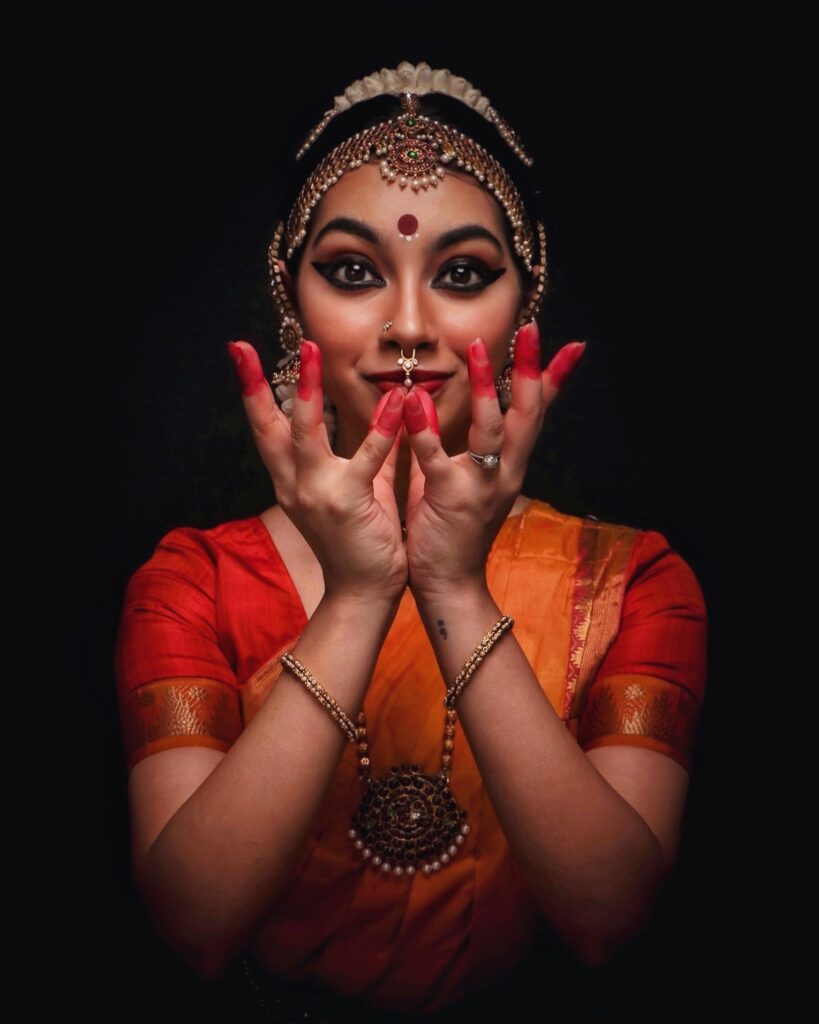
Singapore-based dancer, Periyachi Roshini asks Bengaluru-based dancer, Shreema Upadhyaya, a few pertinent questions that concern the world of young dancers across the globe Do you feel like as a dancer, you live two separate lives? As a dancer most of the time, we are expected to uphold a certain image that may not necessarily be our quirky and unique self. Do you feel that especially since you have a following you feel the need to succumb into the expectation of being the ‘dancer’ Shreema rather than Shreema as a person. Or do you feel both the Shreemas co-exist as dancer and person. I bring this up also because I know of many dancers who have a public account where the account is solely for dance content and then a personal account where they can post about their daily lives, fun stuff, etc… Your thoughts I think with any profession these boundaries exist, and they exist with good reason. When working in such a setting, I think our personalities definitely have to take a backseat. And a lot of dancers prefer to separate their career from the rest of their life. Social media has definitely blurred a lot of lines in that sense. It is neither strictly professional nor personal. I myself have a single account where I showcase both my work and share glimpses of my life, essentially whatever I am comfortable with putting ‘out there’. I do receive flak for certain choices, but then again who doesn’t? I believe I shouldn’t let the fear of that stop me from being myself, or rather make me pretend to be something I’m not. It could help someone else be more comfortable being their true selves as well. Dancers can have fun too! Are you currently a full-time artiste? If so, how sustainable is taking up the arts as a career? Sustainable in the sense physically, what do you do to make dancing a durable art form? Financially, what are some things that help you sustain as a full- time artiste? I am a full-time artiste. Financially, I do agree that the classical arts are not quite yet there in terms of adequate compensation. But from what I have experienced, in today’s world, the possibilities are quite endless, if one puts their mind to it. It does require a great deal of planning, creativity and exploring different kinds of projects at times. In the end, knowing what one wants and which path to take, a sense of direction helps make life in the arts sustainable as a career. Discipline, hard work and most of all patience really pays off in this field. Nothing happens overnight, so pacing ourselves physically and mentally can keep us healthy, and dancing in the long run! How do you think the arts industry can better support upcoming artistes in creating work in terms of grants system/opportunities/mentorship programs, etc? A lot of young artists today don’t really have the access or means to financial support systems such as grants, simply due to a lack of social privilege. Making these processes more transparent and equitable would definitely be the first step. There has certainly been a lot of change that has been brought by the current generation of artistes and mentors, as long as we continue moving in the right direction! What inspires your creativity? As a dancer, you seem to have carved out a style that is unique to you, was there a process to it? Do you look outside of your learnt art forms for inspiration? I remember asking this question to my guru, Praveen Kumar, once, and I’ll always remember his answer. Inspiration can come from absolutely anywhere. And so observation is key. From nature, literature, the people we meet, experiences, sometimes the most mundane of human activities. And art is simply bringing out these observations, beautifying them. I love experiencing other art forms too, whether it is music, dance, paintings and not necessarily those native to our culture. There is so much give and take that can occur once one begins to understand the approach to one’s own art form first. Finally, where do you see yourself in the future and what do you want to bring to the table in this industry? I see myself dancing for however long I can. Art has a way of humbling us the more we explore it and attempt to master it. While I’m not certain of what I bring to the table, I truly hope this process of learning and practicing continues taking me on a beautiful yet challenging journey. And as a tiny speck, I can take this art forward in some way.
Work-in-Process
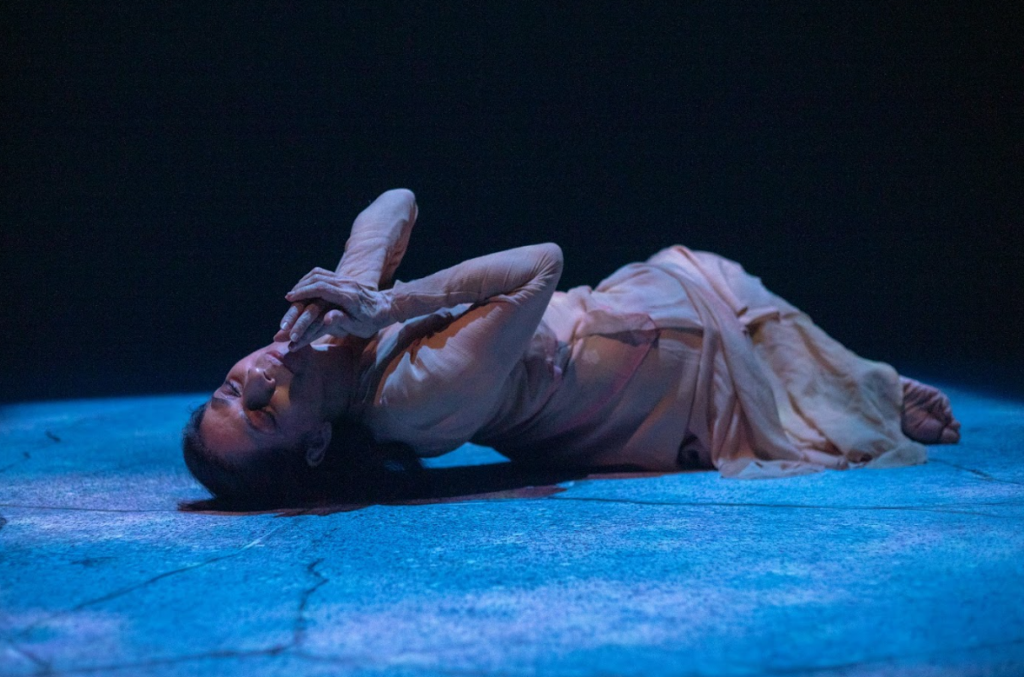
Peeling the Layers… Of female sexual desire… Leading Kathak exponent, Aditi Mangaldas talks about her bold and brave new work, Forbidden, and the story of how it came to be Surely, the idea of Forbidden didn’t happen one day or one night or in a moment, right? But what was that final moment when you decided to distill the thoughts in your head and create a work out of it? Most of my choreographies start off on an autobiographical note, hopefully, eventually opening out in a parabolic universal trajectory; it was the case with Forbidden too. The idea for any production of mine, whether classical or contemporary dance based on Kathak, has always brewed within me for months. If you are open to the pulse of life, then a piece of music, poetry, literature, architecture, movement, nature in its intense beauty and fury, a beautiful painting or sculpture becomes the inspiration and the trigger point. A small seed germinates within your being. For many years I was observing how female sexual desire was trapped in taboos and societal sanctions. Though I come from an extremely liberal family and have lived life mostly on my own terms, these societal taboos do creep in insidiously. The question haunting me was, why is the world scared of female sexual desire? Why are women – the world over – from conservative as well as liberal societies, sanctioned, judged, controlled, hounded, shamed and eventually punished because they have the courage to own their desire? What is the root of this fear? In its very title, Forbidden has a quality of the mysterious in it; something we must not; what was it like for you to explore or traverse into a zone like this? Did you find freedom in the process of this exploration? As women, we grow up realising the taboos attached to female sexual desire – it’s a lived experience, no matter where we come from. As an artiste, I feel compelled to confront these taboos, to acknowledge female sexual pleasure and the ownership of it, which is forbidden. Sexuality is a private affair but all the sanctions attached to it requires and demands taking a stand on the universal, public and personal front. It was not an easy subject, as I realised myself, how deep rooted this fear of female sexual desire was. Quoting the mythologist and storyteller, Devdutt Pattanaik, “… fantasy frightens us, especially female fantasy… One way of regulating fantasy has been by propagating stories where women who pursue their desires are viewed as dangerous, hence need to be restrained for social good.” The process of Forbidden, was like peeling an onion laboriously with every peel making me realise how entrenched this aspect of the forbidden is. In contemporary dance and in the works that you create there is a dramaturg; what is the role of the dramaturg and why is this not yet a prerogative of the classical? For me, as a classical dancer, the aspect of questioning myself has always been interwoven within the repertoire, constantly requiring me to be vigilant. The training, if honestly received, imparts the ability to question oneself fearlessly and critically. Thereby making one their own dramaturg. However, I have not developed this sensitivity when applied to contemporary dance based on Kathak. The dramaturg, in this case Farooq Chaudhry, became the third eye, constantly questioning the intention of every aspect of the production. There is detailed introspection, to ensure honesty towards the work. Female sexual desire is in itself a complex notion to navigate because so little is written or spoken about it for various reasons; what was it like to articulate this in movement? What were some of the challenges you negotiated along the way? The biggest challenge was to confront my own walls, as a woman and as a classical Kathak dancer. The other challenge was transforming these emotions into movement. Forbidden is ferocious and innocent simultaneously. It became a huge challenge to maintain and communicate this duality throughout the piece without unnecessary verbal explanations. I explored many movement vocabularies, slowly letting a tiny essence of them be absorbed within this Kathak being. Forbidden has been realised after months of internalisation, debate, troughs and peaks; as each collaborator offered nuance to the work, till I found myself immersed in it. To create work like this also requires courage; would you like your personality to give your dance that courage or did dance give you the courage to become the person that you are? For me, any production is a two-way process. I would like to be immersed in dance just as much as I would like dance to be immersed in me. Artists are driven to explore subjects that consume them. That drive is a possession which compels artists to face and share provocative and difficult issues. In doing so, their immersion in dance and the dance immersed within their beings is a must and that becomes the fulcrum of the courage that is required for pieces like Forbidden. Lights also play a crucial role in the works that you create; what is the role of lights in this work? I try to encourage the viewer to enter any of my works at multiple and diverse levels. I do not want to put a full stop but like to leave a comma, letting the viewer add their own narrative. For maximising this, all collaborative inputs including light design have a major role to play. It has been a thirty-year dream of mine to work with the legendary light designer, Michael Hulls. Michael was actively involved, not only as a light designer but as a collaborator engaging in all aspects of the work. Only then can a homogenous light design emerge. The lights embody the duality of ferociousness and innocence – they tell a parallel and yet completely in sync narrative of Forbidden. You also acknowledge your mentor here; what is the role of a mentor while creating works like these and why
Point of View
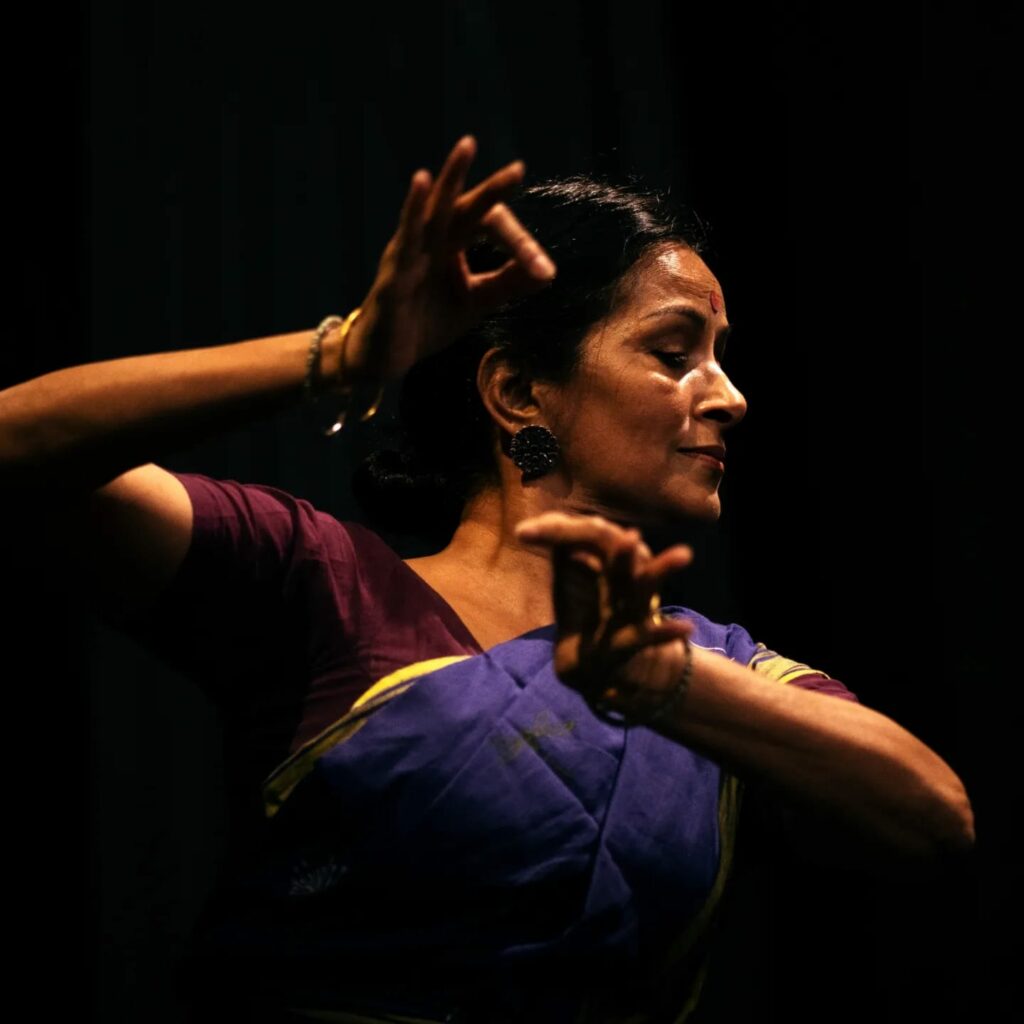
Documenting Transitions Vidhya Subramanian, Bharatanatyam exponent, based in Chennai, shares her perspectives on the many shifts – over time – in teaching and learning in the world of dance Krishna transitions from desire to duty, from lover to king, from Gokulam to Mathura, from a life of leisure to the Gita. Change, sometimes abrupt and at other times measured, is a reality of life and transience is the only constant that has potential for growth but also results in loss. Transitions can be both appealing and arduous. I learnt from a traditional nattuvanar, Guru SK Rajarathnam as well as from Kalanidhi (Narayanan) Maami. How I teach today is, in many ways, informed by how they taught and yet also it is an amalgamation of my performance experience, life lived in the US, my move back to Chennai, and my personal negotiations with the art. Pedagogy was organic when I learnt, methodology developing simply from the day-to-day-ness of teaching and learning. Class would start without much preamble, a simple thatti kumbidudhal, and then on to the item/s to be worked on for the next two hours. With Kalanidhi Maami, I was first introduced to dialogue and analysis, although mostly pertaining to the composition being learnt. All through my learning period, there was no analysis of an idea, conversations about inward journeys, articulation of process, not even a warm-up or cool down. All of these, barring the warm-up and cool down, were simply present in the rigour of dancing, a rigour that revealed much more than words, if one had the patience. Lack of patience wasn’t a choice. Teaching became a part of my life at a very early age, courtesy, my move to the USA. As a young teacher away from home, I relied heavily on how I had learnt as a way to teach. Over time, I added warm-up, adavu categorization, theory lessons, accountability sessions, practice logs, strength training, stretching, a handbook, conversations, and social experiences with students. While setting compositions on my students, I chose to focus on the individual and their strengths/weaknesses as a dancer and a human, in part similar to the way I had learnt. The years of dancing, teaching and living in the USA, as well as a Masters with a focus on Bharatanatyam, meant a gradual expansion of methodology and management. Coming back to India regularly revealed that some of my peers in the field were doing the same. Words such as choreography, process, emotional access, relationship with space, balance and so many more we take for granted today, took on a deeper meaning as an entire generation of dancers began searching. Technology somehow both adds to and subtracts from this journey. Today, we have a young dance generation starved to learn, create, articulate, grow and disagree. It is both energizing and joyfully exhausting to engage with many of them. Teaching is an extension of all the work one has been doing so far and a necessary transference of legacy. For me it continues to be focused on the individual, except merged with the conversation that enriches the process. For many young dancers, the cerebral and the corporeal are in a simultaneous pact in the strive for excellence. Once in a while though, it is necessary to silence that head voice and simply dance. To let the emotions surface, to even revel in them, find the silence in them. The transition into an era of abundance has already occurred. As an entire generation of dancers matures in experience, it is important to reflect upon the conflict between duty and desire, to pause and wonder what defines growth and what has perhaps been lost and left behind.
Books Banter
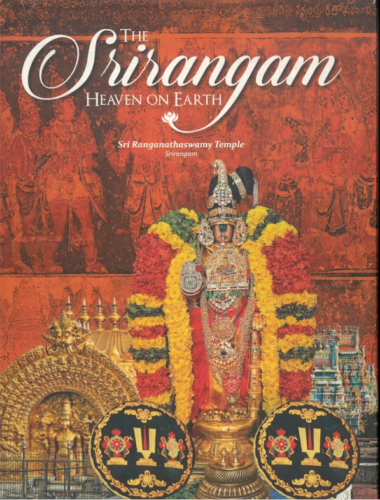
Celebrating Continuity in Tradition Chennai-based historian, writer and author, Dr Chithra Madhavan, an expert in Indian temple architecture, history, sculpture and iconography, shares her thoughts on her book, Srirangam. Srirangam is a fabulous compilation of this temple town; what was your experience of putting it together? The Srirangam temple is an amazing temple-complex which has evolved over many centuries. It is truly a combination of traditional lore, history, architecture, sculpture, inscriptions, rituals, festivals and a whole lot more. It is important to understand that many of the rituals and festivals in this temple are many, many centuries old and are still being practiced today. There has been a continuity in tradition here despite many setbacks. Numerous dynasties have contributed to the architecture and sculpture of this temple. It was a challenge putting this book together, as the different aspects had to be showcased. The contributors have done their best in writing relevant chapters for this book. Without their contribution, this volume would not have been published. As a historian, do you believe that a place never exists in isolation; that its people, culture, society, practices, art, sculpture, architecture all have a crucial role to play? Indeed so. A place can never exist in isolation- there are many factors that make it happen. In times of peace and in times of stress, the reflection is seen on any place and more so in a temple. Rebuilding after an invasion, enhanced social and cultural activities in times of peace, migration of people from other parts of India bringing in their own customs which become entrenched here. These are a few factors that influence the ethos of a place. Srirangam is of particular fascination for classical dance and dancers because of Andal. What aspect of Andal does this book delve into? Andal’s association with Srirangam is well-known. It is here that she merged with God Ranganatha. Her Tamil verses (pasurams) on this deity are many and are recited with fervour even today. There are as many as three sanctums for this Goddess in the Srirangam temple. Many festivals are celebrated here for Andal and she is part of the ethos of Srirangam. This book looks at the different shrines of Andal that are in this temple in the chapters on architecture and sculpture and also many details about this pre-eminent devotee in the chapter on the Azhvars connected with Srirangam. Do you believe also that for any artiste, understanding and appreciating the allied aspects of an idea can help enhance their articulation of a central idea? All of our arts in India are connected. If a performing artist- musician or dancer- wants to sing or dance about Andal, for example, they must know about her life and her association with the different places she was connected with. Likewise, it is mandatory for a historian to know about at least some nuances of allied subjects- literature, music, dance etc. These subjects cannot be studied in isolation. While there has to be a focus on one particular subject, the peripheral ones too need to be studied. This is mandatory. You said this book is extra special to you. Can you tell us why? This book is indeed special to me because first, I am a devotee of God Ranganatha and Goddess Ranganayaki Thayar and also because I am in love with this temple because of its ancient history, architecture, sculpture and inscriptions. This huge temple complex has the largest number of gopurams, the largest number of sanctums, the largest number of mandapams, the largest number of festivals and more than 600 inscriptions. It is a paradise for historians and archaeologists and scholars of religion. It is number one among the 108 Divya Desams (places sanctified by the pasurams of the Azhvars) as eleven of the twelve Azhvars have praised God Ranganatha. For these reasons and more, I’m in love with this temple and so this book is special to me. As a writer and author, does writing each piece or book become a journey of discovery; what was that moment for this book? Indeed, writing or editing each piece or book is a journey of discovery. Since I was not the sole author of this book, but the General Editor (also contributing several articles to it), I learnt a lot from the contributions of the other authors. There wasn’t just one, but several moments of discovery while putting this book together. So many nuances of its tradition like the Araiyar Sevai ritual, the sacred garden from which the flowers are brought to God Ranganatha. So many more were things I did not know much about earlier.