Portrait
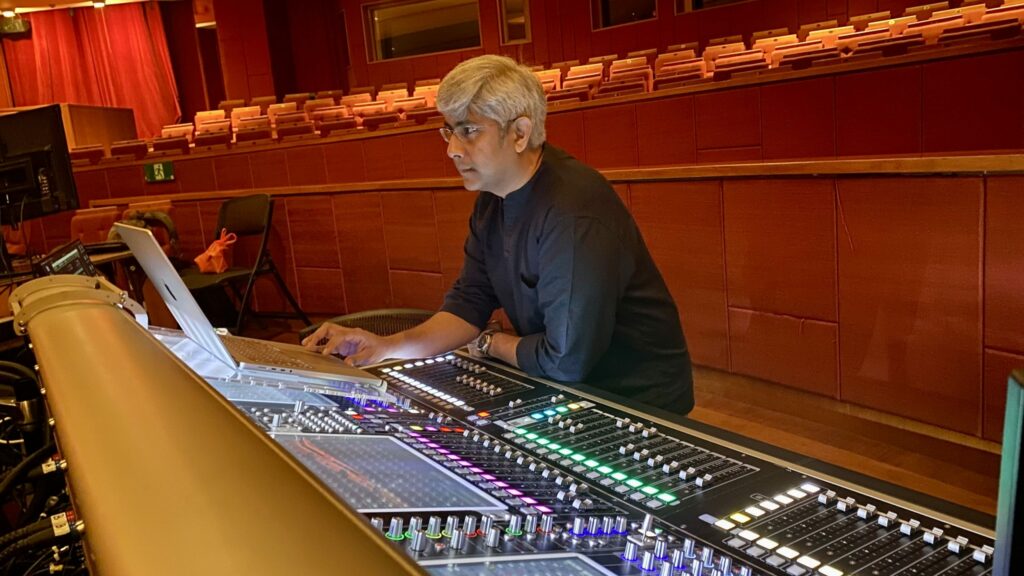
“My life is sound… I breathe sound, I walk sound, I live sound,” says Sai Shravanam, Music Director, Music Arranger and Sound Engineer, even as he shared special moments from his journey with Apsaras Arts, over the years Sai ji, you have been associated with Apsaras Arts for so many years now. Can you share with us what have been the key highlights of this association? To me, it was always Aravinth Kumaraswamy and not Apsaras Arts. Because I have always interacted with Aravinth and not with any of the founders or other members of Apsaras Arts. All I know is AK, Aravinth Kumaraswamy. I have also seen him as the principal person there, and Apsaras Arts is such a part of him. To me, he is an extraordinary visionary. I think of him as a silent worker, low profile but full of high spirits. The way he handles everything for Apsaras Arts will make you feel that Apsaras Arts is Aravinth Kumaraswamy and Aravinth Kumaraswamy is Apsaras Arts. Honestly, I am not able to separate the organisation and an entity. But what I have known from Aravinth about Apsaras Arts is that he shared an incredible love for Neila Sathyalimgam Maami, the founder of Apsaras Arts, and every instance he keeps referring to her. Unfortunately, I have interacted with her only once. As a company, what I love the most about Apsaras Arts is that it is more than a mere company, it is a family. From day one of my association with Apsaras Arts, everyone there has been so warm and friendly, treating you like a member of the family and at no point as a client who works for a producer. That feeling, I must admit, is very beautiful. There is a great sense of belonging here. As a result, creating work for/with Apsaras Arts over the years has always been about the joy of creating whatever I’d like to create; it has been a very creatively fulfilling platform for me, personally and I think the person who enables it all is Aravinth Kumaraswamy. As a company, the spirit of Apsaras Arts is inherently collaborative. Can you share an experience from your years of working with them that demonstrates this idea of collaboration? Trust is a very important part of any collaboration. I do not believe in collaborations that happen because one is knowledgeable in the arts. Collaborations happen because of the amalgamation of heart and the arts. This is very important. I see Aravinth as a catalyst, in how he chooses people to do the work, the way he envisions a certain production and becoming the catalyst for people to realise their artistic dreams. What’s amazing is that he gives his collaborators space and freedom – be it lighting, composition, sound, stage, or an organisation like Esplanade that commissions Apsaras Arts to create and present a work. His vision to ensure that everyone comes together to ensure the success of a production is truly amazing. I think that is called freedom. If I have to share a story, I remember this production Angkor where we were working with the Cambodian Gamelan. It was all very new for us – the production was on on altogether different scale including the feeling of performing Bharatanatyam in collaboration with Cambodian musicians. It wasn’t easy for us to go overseas and create something just before the show. The risk therefore was that parts of the music were recorded and most of the music was live musicians, and some part of it would be a mix of live and recorded music, together. Honestly, it isn’t as easy as it sounds and it’s near impossible to pull this off without a great deal of homework and planning. The good news with Aravinth is that the homework part is incredibly good that I just can’t even begin to describe it. Right from the way he prepares an excel sheet, to the way the rehearsals are spaced out and planned, everything is rigorous and meticulous with great attention to detail. For the Angkor production too, the homework was so well done that the audience didn’t even know which part was recorded and which was done live or which parts were the coming together of both. You have had the privilege of creating soundscapes for Apsaras Arts’ productions both small and big, for a while now. Is the planning and process of each of these works different and how has processes like these helped you personally, grow as an artiste? Every time I have worked on soundscapes for Apsaras Arts, it has always been like a Eureka moment for me! Personally, I always like to put myself in situations that I am not comfortable in/with and win them over. That’s my inherent nature – the need to explore and not create within a boundary. So when the first production Angkor came in, I realised Aravinth’s vision was large, and it was impossible to do that with live musicians. It was not about the capability of the musicians but really more about the magnitude of the stage in Esplanade, the cast, etc. You need to have orchestral music for the sake of grandeur. Our Indian music is inherently horizontal and not vertical. We don’t have music with harmony. So it tends to be very monotonic. For the very first time, in this project, we created a success story by mixing live music, recorded music and managing to mix them both. I can say that it was probably one of the very first shows that successfully ran for two full shows with live, recorded and gamelan music. And this was a feather on my cap as well as for Apsaras Arts. The other production after this was Anjaneyam, which was even larger. Yet again, in this production too, we wanted to include recorded music, live music and add a slew of special effects to the music. The whole project was inspired by special effects, all of
Travel Diaries
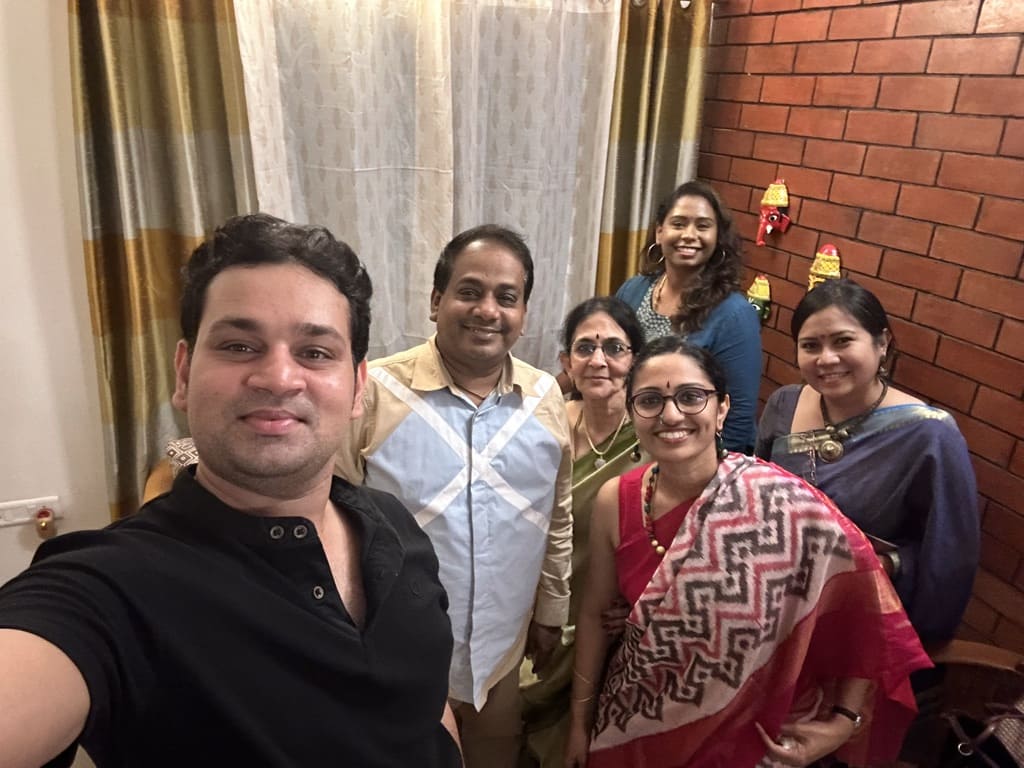
Spirit of Margazhi Bharatanatyam dancer Nitya Sriram from Singapore recounts her experience of the December Music Dance season 2022-2023; her learnings, new perspectives and connecting with the dance community from across the world in Chennai The company dancers and I had excitedly gone through the Music Academy schedule multiple times, prior to the trip and had almost memorized it. We chatted away on the flight to Chennai, discussing the exciting line-up of the Madras Music Academy Dance Festival. This time, we at Apsaras Arts, had the lovely opportunity of dancing at two prestigious venues in Chennai at Vani Mahal on 5 January and the prestigious Madras Music Academy on 8 January. The dance festival line-up at the Music Academy was, as always, amazing. Every solo artiste had something unique to bring to the festival. Bharatanatyam dancer Praveen Kumar kickstarted the festival with a phenomenal solo. He performed the piece, Yathai Kandu Nee Ichai Kondai, in ragam Kalyani which I will never forget. This Padam was narrated from the perspective of a father and is about dealing with his relationship with his daughter, and was different from the typical Padams that we usually learn. Every artiste incorporated a piece of themselves into their dancing and there was a lot of divergence from traditional topics that were covered in their repertoire. It was truly refreshing to watch and spurred some creative ideas in me as well. Apart from the slew of performances, we had rehearsals every day. We got the opportunity to re-unite with our friends from India. It was fantastic to spend time with Rutuja, Nivedha and Vaishnavi who danced with us just a couple of months ago at Esplanade Theatres for ARISI:Rice. We immediately got to syncing our learning with theirs and had a fabulous time dancing with them on stage in their home ground. Vani Mahal and Music Academy are venues I have frequented since I was a child and have seen so many of my dance idols perform here, and to be dancing on those very stages felt absolutely surreal to me. Connecting with other like-minded dancers, watching programmes and dancing everyday, made the trip wholesome. To be in a city with so much talent during the beautiful season of Margazhi will be an experience I will never forget.
Work-in-Process
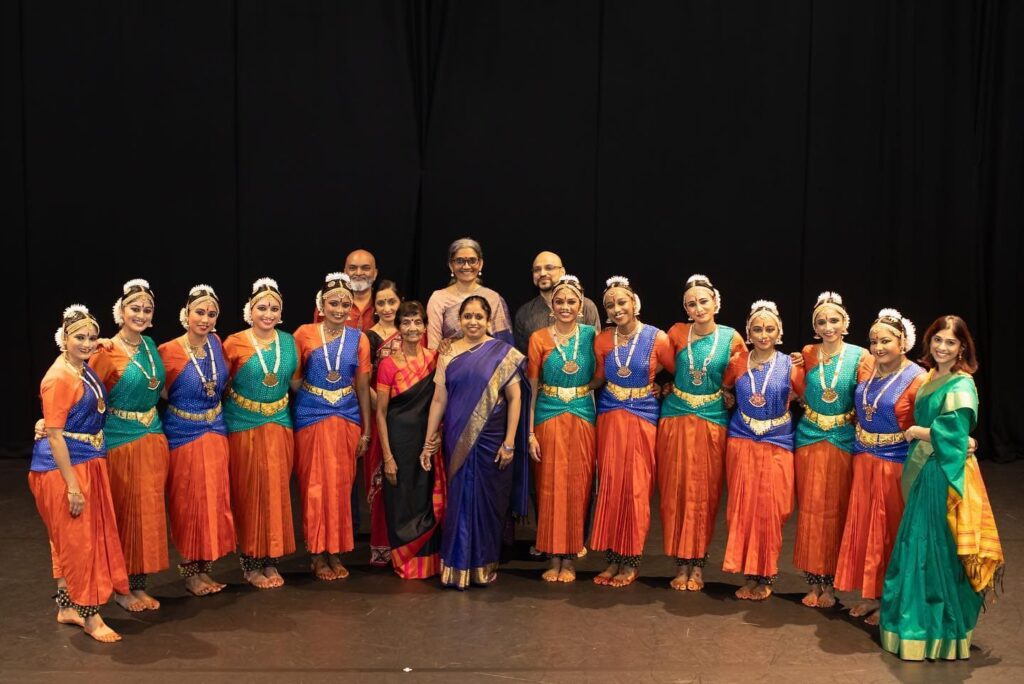
All Things Under the Sun Lakshmi Krishnan and Sujatha Rajagopalan, senior teachers from the Temple of Fine Arts, Singapore, jointly explore their new work Surya – An Awakening, with their fellow dancers. A sneak peek into the process behind the work Surya, your latest production, is a search, a seeking. What triggered this idea? It had been a long time since the full strength of our Bharatanatyam dancers had come together as one. Our dancers and students were all growing individually, one by one finishing their Arangetrams and continuing their learning journeys, training and explorations. But during the years of the pandemic there were many restrictions, and we couldn’t be together in the same space. That’s how Surya began – with a desire, an idea of wanting to be together in the same space and share the energy that comes with being together. In coming together, we experience warmth, energy and vigour. All the same things we receive from the sun. In Surya, the production, we awaken once again the spirit of moving together, getting things done with newfound ardour, sincerity, light and love. In most of your productions, there is a notion of seeking, of finding; why is this integral to your dance and to your journey as an artiste? I think the idea of seeking is fundamental to every student of the arts and to myself as a life-long student as well as a teacher to other students. The idea of seeking is also something that is very close to the Temple of Fine Arts, as well. Our Founder established the Temple of Fine Arts and set us on a journey to seek and share beauty, love, light, art just for the love of it. And it is never done alone. Yes, the seeker seeks, but there is always the sublime who helps to shine light on the path, to help us across to the other side of the river; whether it is providence or a teacher or the energy of the group that acts as our boatman. Surya is an idea dancers have dabbled with often. What sets this apart? And how? Ours is an inward journey through three items. Our search for the question of what the sun means to us happened during the process and it is interesting because the search and quest for answers has been a true one, and not just for the show. With Surya, we are trying to go deeper into the subject. Yes these are things we have done before or subject matters we have explored, but when we go deeper we also awaken our senses to new discoveries and revelations. Both for ourselves as choreographers and for our dancers who have different levels of experiences, who are all awakening to the nuances and depths of Bharatanatyam in different ways. Surya is a performance in Bharatanatyam inspired by the traditional solo margam repertoire structure, but explored through a group ensemble. It has been very fulfilling to work together with this group of young adults and dancers, to listen to their thoughts and see how the different imageries and meanings of lyrics have now unfolded. Take us through the process of how an idea translates into form and expression? Typically how long do you work on a production? A production takes a long time, from inception to bouncing around ideas, back and forth with storyboarding, music, and iterating through dance. It typically takes about a year. For Surya, most of the items had already been choreographed as solo pieces of work, and were completely re-looked and re-worked for 11 bodies to create so much more depth, imagery and meaning. We also had the challenge of working with 11 dancers at a time when the Temple of Fine Arts was moving its premises and there was a shuffle in rehearsal space availability. Our dancers worked closely with us, we worked closely with our dancers, and we are very proud of what we are sharing on stage in a few weeks to come. What about lighting, costume, etc. what role do they have to play? The lighting will serve to enhance the thought process of the dance and to also help bring out imagery and formations to elevate the experience. We have kept costumes simple but the colour schemes will go with the theme of Surya. Are your creations truly collaborative in nature? How does that elevate the whole process and experience? We are blessed to be working with a group of mature young dancers, who are encouraged to contribute ideas for group choreography. The safe space we have created for them has enabled them to actively be involved in giving suggestions to do different aspects of the choreography be it formations, imagery or even movement. In this way we have seen them actively grow over the past few months and it has been a rewarding experience for us, to say the least. We have collaborated with our musicians at the Temple of Fine Arts to also enhance the experience of music for the ensemble work. Our dancers have also taken interest in costuming, designing brochures and posters, publicity and marketing. We have allowed them this platform to grow by collaborating, to enter the space, to bring in their expertise in these areas. We are also working with a professional lighting designer. Having been a dancer himself and worked on several dance productions with us in the past, he serves to enhance the experience by understanding the choreography better. It is a gratifying experience for us to see our dancers being involved in the full process of the production, so that they are growing in a more holistic way as artistes.
Work-in-Process
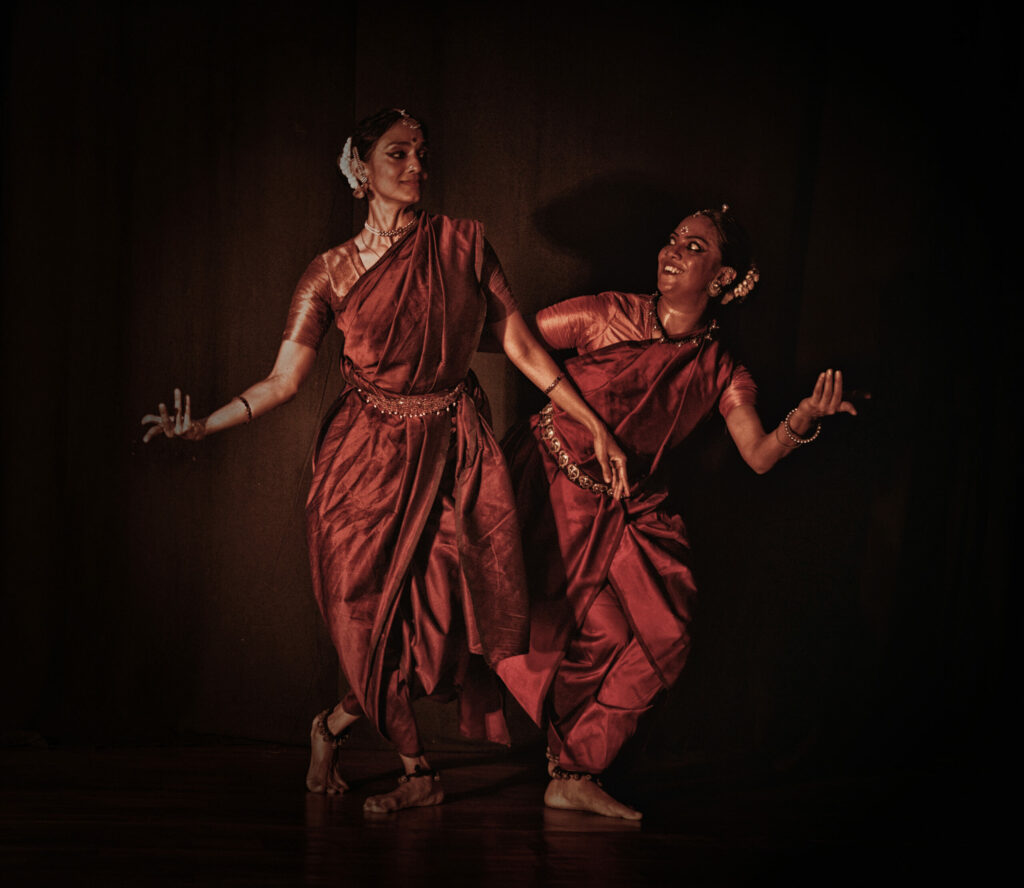
Ode to the Senses The classical styles of Odissi and Bharatanatyam, conceived and performed by artistes Shashwati Garai Ghosh and Lakshmi Parthasarathy Athreya, come together to create Anubhav, a sensory experience. Read on for how this work came to be in an interview that combines the voices of both artistes What is the genesis of Anubhav: Deeper with the Senses? It all started from a very honest friendship and vibe as thoughtful artistes. As solo artistes, how important is it to have a good working relationship both professionally and personally? Any art form requires a sense of collaboration. Though we call it a solo, it is honestly a lot of teamwork. As dancers we cannot create or present anything in isolation; we need a team with good work ethics, those who are committed to the project and are keen to maintain good relationships to keep the process going. What inspired the title Anubhav? We both are at a phase in our lives where we are keen to present and share our experiences and artistic ventures with a larger universe. Anubhav occurred in a very organic manner and fit itself beautifully into the form of a production that brings both our aesthetics and artistic sensibilities to the fore. We had the fortune of witnessing Anubhav in Chennai. Why is it essentially a sensory experience? Anubhav speaks a lot about deep and intense senses, both physical and emotional. You have already premiered the work in Chennai, Bangalore and Kolkata. Is the work evolving as it travels across cities and what are the key takeaways from it? Absolutely! Dancing as duets, with two different classical dance forms has been challenging and at the same time, a very welcoming experience. To remain in our respective genres but also intertwine with each other’s sensibilities and create one vibe has been a real learning process. Anubhav will grow and mature with our artistic growth. Also it will remain open to creative changes so that it evolves more.
Books Banter
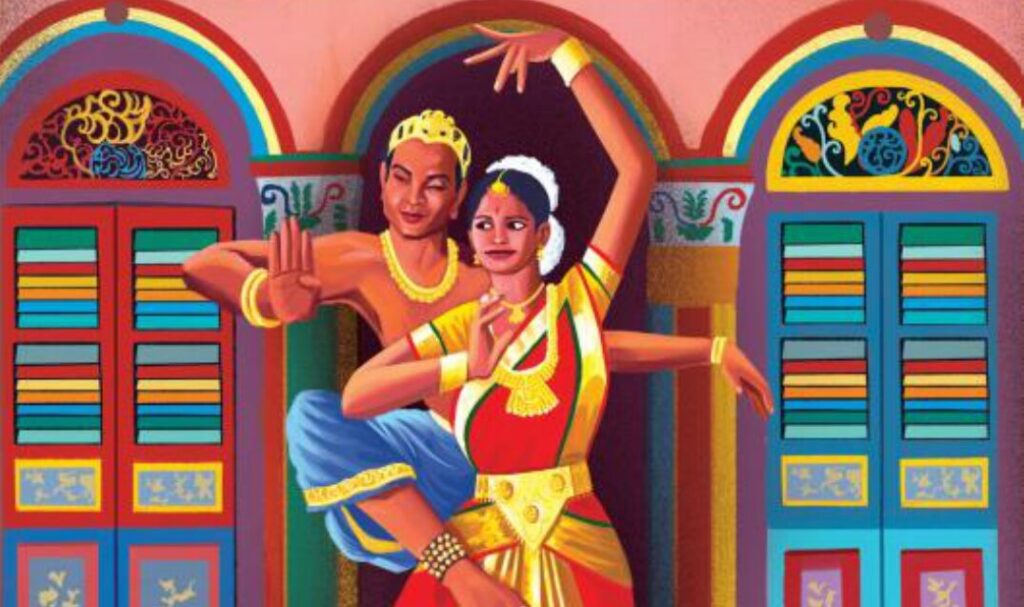
Sketch in Time Meenakshi Bhaskar, Artistic Director, Bhaskar’s Arts Academy, Singapore, talks to us about their new comic book, designed specifically as a tribute to their Founders, KP Bhaskar and Santha Bhaskar. How did the idea of this book come up? Various ideas were explored to commemorate Bhaskar’s Arts Academy’s (BAA) 70th anniversary in 2022. One of them was to create a book that would celebrate and tell the story of our founders, KP Bhaskar and Santha Bhaskar. The BAA team wanted an easy-to-read book that would appeal to all age groups and therefore the Amar Chitra Katha style was chosen. BAA then reached out to local children’s author Abhirami Krishnasamy to take on the project, who by chance was already planning to write a book on Mr & Mrs Bhaskar, her teachers. Things quickly fell into place after that. Abhirami introduced us to illustrator Sayan Mukherjee and publisher World Scientific Publishing. Why did you choose to go the illustration way? Children of Indian descent have learnt about mythology, fables and even Indian historical figures from a comic series called Amar Chitra Katha. These books conveyed the story in an easy-to-read manner and were a popular way to introduce children to the stories from their culture. We wanted a book that would be accessible to as many people as possible. The actual story of how Mr Bhaskar had his start in the arts is dramatic, as is the story of how he chose and married Mrs Bhaskar. This is the story of a pioneer of dance in Singapore, and of a South Asian migrant, which is still relevant in so many ways. The vibrant and colorful depictions convey the story in a novel way, and allows readers to finish it in one sitting. Who is the book meant for? The book was written so that even young children could be engaged by the story. We wanted to reach all demographics. The extraordinary life of Mr & Mrs Bhaskar is inspiring, considering their humble beginnings. They never gave up even during tough times. We believe it is a story that needs to be captured and preserved for future generations, and hope it can serve to inspire the many emerging artists around the globe. What can we expect from the book? Is it a biography on the lives of KP Bhaskar and Santha Bhaskar through the lens of dance? This is a story of KP Bhaskar and Santha Bhaskar, pioneers of dance in Singapore. It is also the story of South Indian migrants to Singapore, and how they started up. It is a story of the beginnings of a couple who strove hard to keep arts alive in Singapore through all the odds they faced.
COVER STORY
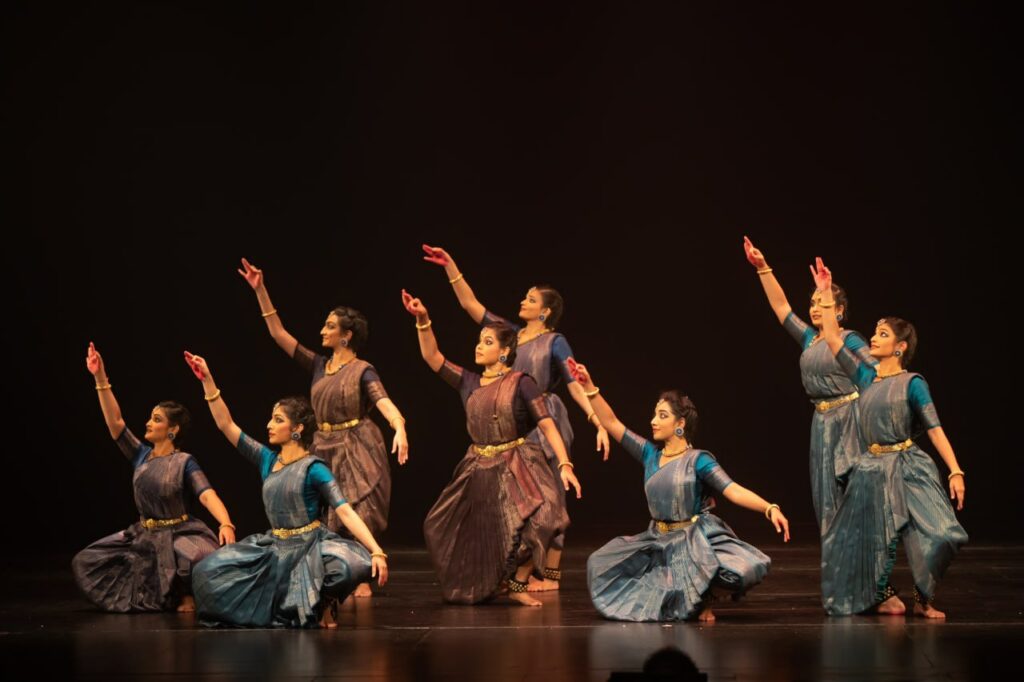
Into the Music of Dance Our Cover story this edition features three musicians and music composers for dance from India, who share their experiences of making music for dance SUDHA RAGHURAMAN Carnatic Vocalist, Composer and Music Arranger What is that characteristic aspect that differentiates composing music for dance and composing music in general? Composing music in general can be like tuning a particular song or putting swaras together or creating score for background music. It doesn’t need too many ideas. Simplicity is its charm. But when we compose for dance, we get into details like the meaning of every word, the underlying meaning, the multiple layers of meanings, and also check if the composition is suitable to dance as an entire piece. While composing swaras for dance, it has to be adavu-compatible. Swaras need not be very mathematical and complex. Sometimes, mere raga lakshana swarams can convey the mood so much better than very skilled or technique- oriented swarams. Sometimes, the situation demands the swaras need more maths. That’s when we use complex patterns. There’s a great level of detailing that goes into composing for dance. I personally feel that a singer or composer must know the meaning of every word/ line, the sthayi bhava of the particular poem/sahitya to be able to create something very beautiful and unique. The audience should be able to listen to the music and relate to the theme of what the dancer intends to portray. One should be able to grasp the theme by listening to the music, with closed eyes. To achieve that requires a lot of hard work. It doesn’t happen in a day. The music of dance should also be able to exist as standalone. Even if one were to listen to it without watching the dance, they must be able to grasp it and create their own dance with it. By virtue of being a musician for dance, what is your relationship with dance and the dancer? Having worked in the field of dance with senior dancers and this generation of dancers for three decades now, I have learnt that every dancer is unique, every dancer has their own strengths and shortcomings and every musician too has their own share of shortcomings. If we could work on our strengths and create meaningful pieces of art, I’d say we are doing something right. Every time a musician sings for a particular dancer, the musician should sound like that dancer. The music must dance and the dance should sing. I think this is crucial; the two are inseparable. When I sing for dance, I become one with the dancer in a performance. There can be no other distraction other than the music, dance, bhava and melody. This is the synergy that is created. To me, every dance programme that I sing for is as much my own programme – never to supersede the main artiste, but to be completely involved in the performance. Many a time, the dancer may not fix the repetitions. So one has to be super alert and spontaneously respond to the dance. The dance and the dancer should be with the musician. For me, I become the dancer, a co-performer and I recognise the dancer is the main performer. Every dancer has a signature style of their own. Do you keep that in mind when you begin composing? What is your process like? Certainly. If I compose music for dance, the composition should sound like it reflects their dance. Their signature style in dance should reflect in the music. I have a particular practice to let go of the classic Sudha style while singing for dancers. Only after working for hundreds of kutcheris, did I realise my strengths and weaknesses. What matters is also chemistry; it is important to have a good relationship with the dancer you are working with to be able to produce good music. Any small differences will show up on stage and in the composition. Over the years of composing and performing music for dance, how have you evolved as a creative artiste? I have certainly evolved over the years. But that has come from years of singing and learning from my mistakes. I was barely 20, when Leela (Samson) Akka called me one morning and asked me to sing for a programme that very evening. We had only one rehearsal soon after that phone call and I went on stage. At that point, my focus was only on singing what we’d rehearsed right more than taking my music or the dance to the next level. Today, I have evolved so much as a dance-musician because of the efforts of the dancers I have worked with and my own interest to understand the concepts and themes I work with meticulously. I follow up what I do with more research and create for myself a vision of my own. I have been very fortunate to be associated with wonderful artistes from all over the world. They give me the freedom of imagination to pursue and evolve with my own craft. Can you – from your repertoire – share with us one project that has been challenging and invigorating at the same time? Moving Boundaries by Rama was a challenging project. The lyrics were minimal lyrics and there were three different pieces of various genres on the topic of bliss. It was not easy working on this, especially in the middle of the pandemic when people’s mental health was at an all-time low. But that also helped me to create something very unique. With minimal lyrics and three stories for 45 minutes, I just used the grammar and manodharma, to create music for this project. Working on Shakunthalam has helped me appreciate Sanskrit more and it has now become my favourite language. Kashi by Meera Balasubramianm was composed without the dancer working with me, in-person. Purushotama for Aravinth choreographed by Rama Vaidyanathan and Pratidhvani for Geeta (Chandran) ji also was created on echo. There have
In Sights
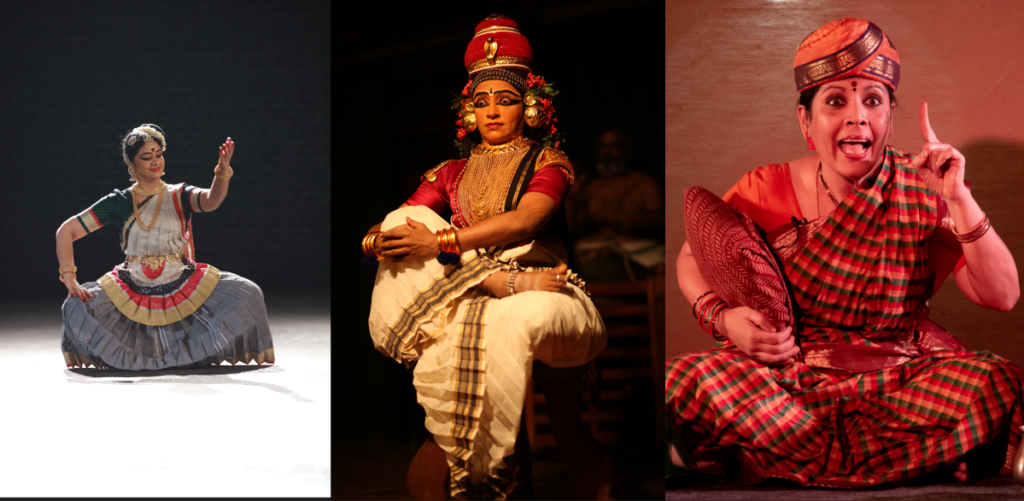
IPAC 2023 – What is in store for Singapore? Read on to know all about the sessions at IPAC Singapore 2023, in detail in the words of Artistic Director of Apsaras Arts, Aravinth Kumaraswamy IPAC 2023 is back in Singapore for the 12th year in a row from June 17 to June 25, 2023. The objective of IPAC has been the coming together of practitioners and sharing of experiences, watching curated performances, getting to know off-stage and off-class practices and creating residency opportunities for aspiring creative artists. IPAC will also host a series of lecture demonstrations and talks at Avai, performance space at Apsaras Arts. The convention features a variety of topics covered by Dr S Sowmya, Embar Kannan, Rama Vaidyanathan, Bragha Bessel, Dr Methil Devika, Ramaa Bharadwaj, Dr VR Devika, Dr Ananda Shankar Jayant and Mohanapriyan Thavarajah. This year, we have new faculty members Ramaa Bharadwaj and Dr Mythil Devika who will be handling many workshops and lecture demonstrations. We are excited to have our old faculty members coming back to IPAC with new ideas and curriculum for the masterclasses and they would be presenting exciting lecture demonstrations, specifically curated for IPAC 2023. IPAC 2023 will present Masterclasses in both Carnatic vocals from June 17 to June 20, 2023 and Carnatic violin on June 10 and June 11. The Bharatanatyam masterclasses will be from June 17 to June 23. Both music and dance will have a segment for teachers’ training too. IPAC will also feature two different classical forms of dance – Koodiyattam and Mohiniattam – both from the state of Kerala. We are also very excited that our music offering is also growing in strength. This time we have two showcase performances as music concerts. The showcase performances at Esplanade include Strings of Gold by Embar S Kannan, an ensemble of Carnatic violins, featuring Singapore musicians; Samavaya: A Euphonic Co-existence by Niranjan, which is a blend of Carnatic music, Jazz, Blues, funk and pop by musicians from various backgrounds; Mahishasura Vadham by Kapila Venu, the slaying of Mahishasura, the classic tale of the slaying of Mahishasura by the Goddess Devi, told through Koodiyattam; Skanda Rasam by Mohanapriyan Thavarajah, inspired by Lord Murugan, and explores the mythology of the divine being through Bharatanatyam and Anaavaran where Dr Methyl Devika presents an original mix of abstract and representational Mohiniattam sequences Stay tuned to our social media handles as we unravel all that’s in store at IPAC 2023!
Point of View
Hema Rajagopalan, Artistic Director of Natya Dance Theatre talks about the changing trends and dynamics in the world of Indian classical dance The term classical stands for something that has been developed over a long time with a keen sense adhering to aesthetic principles and traditions. Creativity is at the very core of all our Indian Classical arts and springs from the roots, like water from a spring flowing in a continuous evolving stream. The various manifestations are bound by parameters laid down by traditions deeply connected to the art form’s reference points. Artistes must not create newness but must find them. Wanting to present something new has become trendy. We see a lot of fresh elements that add to raising the aesthetic enjoyment of the Rasika but some others that simply take away that quality. Thematic presentations Thematic solo performances of the Margam, a new trend has now become a norm. This can be challenging to create a performance with variety but definitely creates an interest in the audience. The traditional margam is often replaced these days by secular content on various topics. Choreography Since the mid nineties dance dramas and thematic group productions have engaged more audiences than a solo performance. Even pada varnams and slow paced padams are being presented as group choreography. While such presentations offer a fresh look and could be good, they often take away the depth of Abhinaya portrayed by soloists. Dancers are presenting works on secular themes and social issues like climate change, water scarcity or the plight of today’s farmers, intending to connect with diverse audiences to make a difference to the world. The use of space, geometry and creative movement vocabulary is being given more prominence and this certainly enhances the artistic quality. Music Musical accompaniment has been evolving. New trends being the addition of western instruments like the Drums, Saxophone and Piano. Music directors are incorporating more orchestration which seems to appeal to today’s audiences. Even if movements lose integrity, Nritta or pure dance performed at a high speed is commended. Introduction of silences, voice overs, prolonging emotions, creating more drama in lengthy items like a Varnam, are new ways of presenting content, sometimes very engaging. Props/ Sets/ Lighting The use of a variety of objects as props to express has become popular. Productions have come a long way by way of sets whether projected on a screen or on the floor including dancers sometimes interacting with those projected images/ videos etc. Lighting: From simple general wash for a solo performance, it has now become very necessary to involve a lighting designer who adds new dimensions to the content. Whether it is the Haze, LED lights, overhead spots or moving light that creates a path, the dancer seems to depend a whole lot on lighting. To summarize, I want to say that changes are very necessary in every aspect of the performing arts but we need to maintain a balance keeping in mind symmetry, harmony and rhythm in order to taste the beauty of Classical Indian Dance.
#iamayoungdancer
Sharing Notes from a Production Dancers Nagalakshmi from Singapore and Apeksha Kamath from Bangalore share common dance experiences and memories. Nagalakshmi and Apeksha had the privilege of sharing energies recently for Apsaras Arts’ production Arisi: Rice, which premiered in Singapore at the Esplanade- Theatres on the Bay in November 2022. That, needless to say, became the starting point of their conversation. They began their talk reminiscing their experiences on working for this magnum opus of a production. Apeksha travelled from India to Singapore to work in this production and she acknowledged that this overseas experience, working and dancing with dancers from across cultures was a once-in-a- lifetime kind of experience. She also praised Apsaras Arts’ company organisers and the dance team for taking care of her needs and she didn’t have to worry about anything; her sole purpose was to dance, which she enjoyed a lot. When asked about her experiences of working with other dancers from India, Nagalaskhmi said that this was one of the biggest groups that she has worked with and she felt very comfortable right from day one. They hit it off together from the start. Nagalakshmi acknowledged that the company dancers learnt a lot from the dancers from India and also the Balinese dancers too. This led to the two discussing the similarities of Bharatanatyam and Kechak dances. Nagalashmi then posed an interesting question to Apeksha about the cultural differences in India and Singapore. Apeksha said that she didn’t find much difference based on the time spent with dancers in Singapore and those in India, as they were all fully engaged and discussing dance, full time. “I was very much at home,” said Apeksha, “Although I haven’t stayed long enough to be able to comment on cultural differences.” Apeksha also mentioned she is a fan of SIngapore as they (four dancers from India) loved the city. She was in awe of how safe the city is, even at 11:30pm and how they could all venture out carefree.When Nagalaskshmi asked Apeksha about the most challenging part of working for Arisi, Apeksha conceded that surprisingly it was not the dancing part but about figuring out seven hours of sleep, not because they didn’t have the time but because of the adrenaline rush and the late night coffee and conversations that kept them awake and invigorated. “I’d say they have been some of the most enjoyable days of my life,” Apeksha said. Apeksha asked Nagalakshmi about how different it was for her working on Arisi compared to other productions of Apsaras Arts. Nagalakshmi replied that her first work with Apsaras Arts was Amara, which was a digital recording. Then came Nirmanika where she worked with dancers from Singapore. “Arisi was a huge production with dancers from India and Bali,” said Nagalakshmi, “And I learnt so much about Balinese dance, how similar it is to Bharatanatyam and their dances in Arisi were mesmerizing, packed with energy.” This led Nagalakshmi to her next question for Apeksha about how she learnt the entire dance in such a short span of time. The Singapore dancers had learnt it earlier but the Indian dancers had to catch up pretty quickly. “I was initially not sure of which style to follow,” Apeksha said, “As there were four dancers from India, and all four have different gurus and the style of dancing of the Singapore dancers was also quite different. It was a little hard and we didn’t yet have a clear picture of the whole production.So we initially learnt only our specific sections and we knew that once we’d reach Singapore, everything would fall in place.” And it did! All’s well that ends well!
Portrait

Past, Forward In our Portrait section this month, veteran Bharatanatyam exponent, VP Dhananjayan from Chennai, talk to us about his Natyam and his association with all things Apsaras Arts You have been associated with Apsaras Arts for a while now. What are some of your first thoughts when it comes to the work that Apsaras Arts has been doing? We (The Dhananjayans) have been associated with Apsaras Arts right from the inception of the institution in the year 1977. The founders of Apsaras Arts, Neila and Sathyalingam used to invite us to conduct Abhyasa saala for their students and teach our special repertoire for their student’s Arangetrams. For their granddaughter’s Arangetram, we were asked to compose a special repertoire suitable for a child of 9-10 years. We composed a Nrityopahaaramon Srikrishna (Guru Rajee Narayanan’s Kalyani Varnam) on Satyajit, who was also a teenager then. He went to Singapore along with Shanta and taught that item to the child. A couple of Apsaras students were sent to Bharatakalanjali Chennai to train for their Arangetram. Since we have had a close bond with them right from the Kalakshetra days, we have mutually benefited a lot in our growth, as successful professionals. In terms of ensemble productions, you have such a rich experience. What according to you are the crucial qualities that make an ensemble production shine and standout? Both Neila and Sathyalingam had a very liberal attitude and approach to artistic endeavours. They helped SIFAS (Singapore Indian Fine Arts Society), a pioneering cultural centre in Singapore in widening their horizon to group productions. On the advice of Neila and Sathyalingam, SIFAS commissioned us – thorough the Singapore government – to produce a mega group production for the South East Asian International Art Festival in 1984-85. Neila and Sathyalingam were instrumental in bringing the artistes fraternity together and established a spirit of camaraderie among the arts fraternity in Singapore. Under their guidance, SIFAS brought students and professionals from different institutions under one umbrella. After auditioning and selecting artistes we trained more than a hundred participants. Bharatakalanjali’s magnum opus production was re-created as a mega group production for the Singapore International Art festival. This was the beginning of group productions initiated by Apsaras Arts for SIFAS, and later they went on to continue their own group activities interacting with artistes from India, especially from Chennai. What according to you is the role of costume, lighting and technology in the context of ensemble productions. You have had the privilege of working as part of Anjaneyam and playing a crucial part in it. How was that experience and what were your key takeaways and learnings? In the four Abhinayas mentioned in the Naatya Shastra- Aangika(physical), Vaachika(verbal or vocal), Aahaarya(costume & stage) and Sathvika(finer expressions) – costume plays a very important role. Aahaarya includes stagecraft, characteristic make-up and external aesthetics enhancing the presentation without jeopardizing or compromising the quality of the other three aspects of Abhinaya. In our genuine opinion, technology could be judiciously employed only for visual enhancement but not to be distractingly overloaded. Especially in Naatya(dance drama), only artistically designed suggestive motives may be appropriate for our kind of idiom, where emphasis is given on body and facial expressions and emotions. My colleague, late Balagopalan and I were invited as guest artistes to participate in Anjaneyam, a mind-blowing production that was a learning experience for me, artistically and technologically. It was a magical broadway kind of presentation never found or experienced in our motherland Bhaarat. You have also been a part of Apsaras Arts’s DIAP and IPAC. Why do you think, as an artiste that lec-dems and presentations are very crucial for the student of the arts? IDAP and IPAC are dedicated ventures benefiting the students community, across the world, who are interested in Naatya and the allied subjects that facilitate them to interact with stalwarts in the fields of the arts. It was a great idea for Apsaras Arts to collaborate with Australian universities and making their students contribute to preserve, popularise and propagate the values of our Bharateeya Kala and its Samskriti. No one has ever attempted to venture into such service- riented online sessions. Kudos to Aravinth, the brain behind it. You have also had a long association with Apsaras Arts’. Neila Maami and her husband; can you share a bit about the bond that you all shared? Satyalingam Anna was a fastidious disciplinarian with total commitment to whatever he undertook and he expected others also to adhere to discipline, devotion and dedication. Sometimes it was very hard to keep pace with his meticulousness. Even Neila Akka found it difficult to do so, with her soft and accommodative nature. She had no pride and prejudice about differences in style, and invited artistes from various disciplines with an open heart and passed on the same trait to her students as well, including Aravinth, a fine musician himself who is continuing the legacy of this great couple Neila and Sathyalingam. Actually speaking, they are instrumental in making Singapore a cultural hub of Southeast Asia. They were visionaries far ahead of their times.