Singapore Indian dance fraternity pays tribute to Dr Sunil Kothari
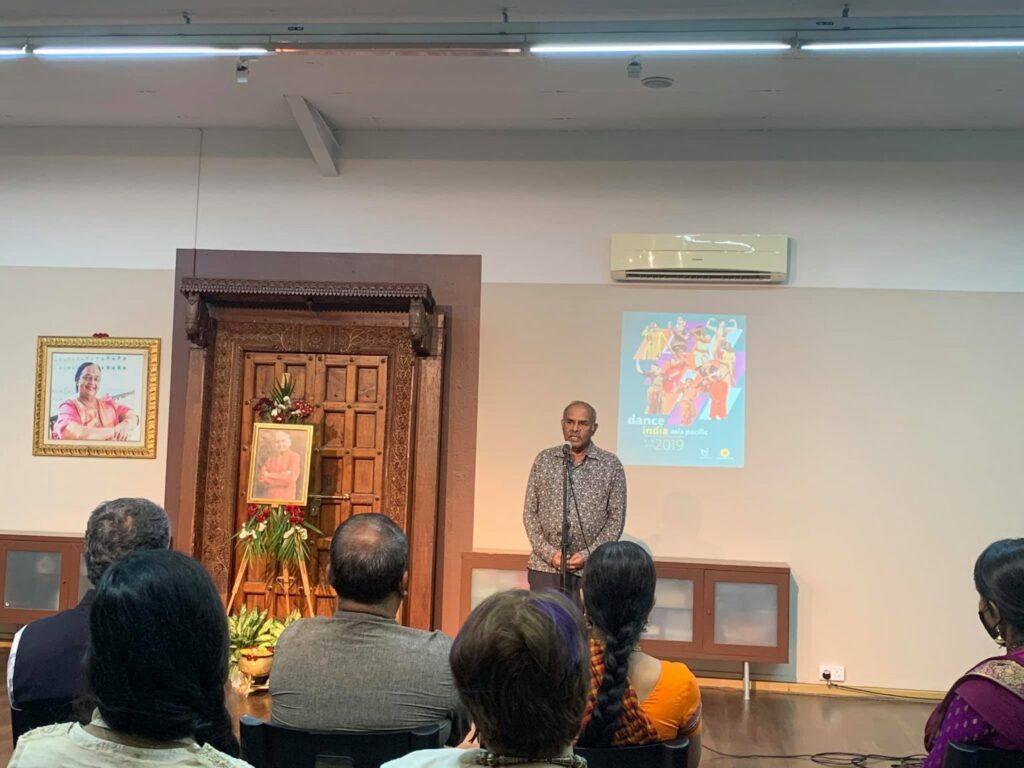
By Soumee De On a rainy afternoon on January 10th 2021, notwithstanding the wrath of the heavy rains at Singapore, dancers, friends and well wishers gathered to remember and pay tribute to Dr Sunil Kothari and reminisce the legacy he has left in the universe of Indian performing arts transcending borders. Hosted by Apsaras Arts at the Goodman Arts Center main studio, the event opened with an inaugural message by Ambassador Kesavapani, Chairman of the Board, Apsaras Arts in the presence of the Indian High Commissioner H.E Mr P. Kumaran. The afternoon’s host, Seema Hari Kumar opened with observing a minute of silence and welcomed the esteemed speakers to share their personal memories of Dr Kothari. Smt Shantha Ratii spoke of her there decades’ of strong friendship through a moving speech, “To the world he was a dance historian, author, scholar, critic but to me he was my friend…a friendship that saw us both through our personal highs and lows and lasted through thick and thin.” She offered her homage by dancing an excerpt of one of his favourite items, “Krishna-shabdam.” Smt Gayathri Sriram, spoke about her experience since the first time she invited Dr Sunil Kothari for Samarpana Festival of Arts and their journey thereafter. She offered a dance homage through a soulful padam, another favourite of Dr Kothari. Mohanapriyan Thavarajah fondly remembered his association, blessings and personal relationship and offered a dance prayer through a lively “Ravanastotram”, another one of Dr Sunil Bhai’s favourite. Dr Gauri Krishnan shared her deep bond and involvement with her family as a friend and Mr Sopnendu Mohanty from Monetary Authority of Singapore mentioned that he will dedicate a chapter on resilience from his book to his never-give-up spirit. Aravinth Kumarasamy, Artistic Director of Apsaras Arts shared how he had benefited from Dr Sunil Kothari’s dedicated feedback and reviews until his last breath over the production AMARA in December 2020. In memory of Dr Sunil Kothari’s life time service to the dance fraternity, he announced a scholarship that will be granted to a young Singaporean writer who will be supported to write, review and critique dance productions to keep the spirit of his legacy alive. “I know nothing in the world that has as much power as a word.” – gratitude to Dr Sunil Kothari for leaving behind these invaluable volumes of words, documenting dance and dancers of this era.
Performing is the spirit to connect and collaborate – an interview with Seema Hari Kumar
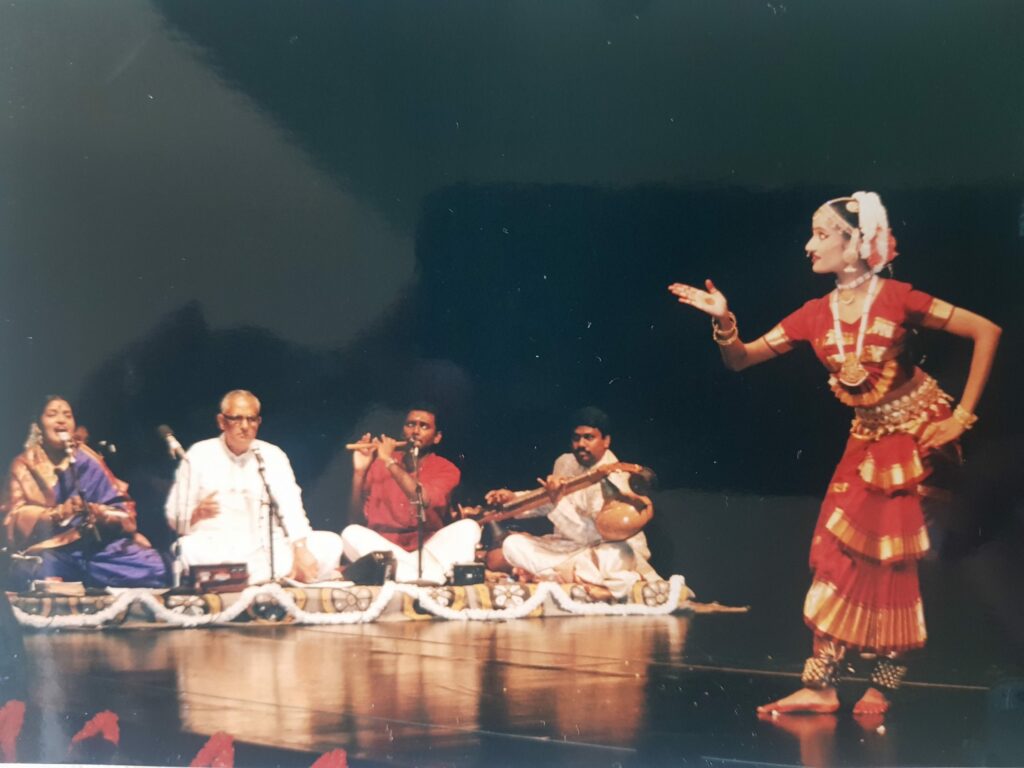
By Vidhya Nair “Performing is not about the self alone. It is about the audience, the collective. The spirit to connect with people and collaborating to create.” Since childhood, Seema has been associated with Apsaras Arts. As a performer, teacher and core team member, her dance journey has nurtured her love and appreciation for the Founders and the path they have created. In this interview, she shares her many insights and lessons.VN: Seema, you’ve been with Apsaras Arts now for most of your life. Can you share how it began? SH: It all started with my mother, Shamala Devi. She grew up in the Geylang area in the 60s-70s. There, she was neighbours with the Vadivelu sisters (Kala & Bhavani). In the late 60s, she was often their chaperone for their dance classes at SIFAS. She yearned to learn it as she watched them but her parents couldn’t afford to send her. So, when I came along, she considered it a personal achievement to have me dance. I grew up in the 80s & 90s watching dance performed on TV and live performances and I noted the known dancers in my community like Gowri Pillai & Bindu Nambiar alongside the Navaratri programs I attended in person. This sparked my early interest. VN: How did Bharatanatyam begin for you? Tell us about those early years of learning. SH: I started at Kala Mandir (later Temple of Fine Arts) when I was 4-5years old, but I lost interest quickly. [In later years, when I began to teach Bala Bharatham at Apsaras Arts, my own experiences at that age became the impetus for me to create a syllabus friendly to young children.] When I was 8 years old, my mother enrolled me at Kallang Community Centre after being introduced to it by a neighbour. Neila Mami was already established there. A larger-than-life personality, intimidating and admired by many. I started there learning under Veshnu (for under a year before he left to train under Guru Adyar Lakshmanan in Chennai) and later Vani, both Mami’s senior students. I appreciated Vani’s teaching style greatly. There are some who have the right personality to teach children. Vani was patient, pastoral and spoke in a gentle tone. It was a great way to begin. During those schooling years, I participated in many Navaratri programs, TV shows and performed at the Narayana Mission. In 1997, I recall my first Chingay which brought me into contact with Mami for the first time. By 1998, I came under Mami’s direct tutelage. As a teenager, I was taken in by Mami – her witty sense of humour, the colonial British tilt in her accent and her varied expressions. VN: What are your memories of Mami from that time and later? SH: She came into my life at the right age, when I was maturing and over time, I was able to overcome my fear and she became an important person I respected deeply. Mami had an extrovert’s personality. She was confident but her strength, I observed came from Mama. For years, I don’t think I realised it till after his death. They were such a dynamic team – Mama & Mami. They had the shared heritage and training of Kalakshetra. Intense memories of their own artistic journey, their romance on those grounds and deep attachment to their alma matter. These are values they led by example, constantly quoting their Gurus, industry legends and stalwarts. They made references to major artistes and revered their teachers. They embodied the culture of “Guru-bhakti” which only heightened your respect for them while at the same time, they were very grounded and humble in their disposition. VN: How did Bharatanatyam become serious for you? What made you pursue it further?SH: As I matured into a young adult, I began travelling with Mami for their overseas tours. In 2001, I became a company dancer and absorbed myself into the culture of travelling artistes. In Dec 2005, I spent an extended period in Chennai which was an important cultural immersion for me. Learning yoga, Sabha-hopping, appreciating and understanding the way performing arts is a part of everyday life of an artiste. Mami was protective on these trips yet she gave me room to grow and trust her decisions. It was a competitive time to be in an ensemble of older, more experienced dancers. I found myself performing in parts and kept myself available for her. The learning process was important to me and it helped me build my own repertoire. [ e.g. Sivagami preparations exposed me to drama classes with G Selva who later set up Avant Theatre & Language][ See his interview Here ] There were occasions when despite my best efforts, Mami would choose others over me for key parts. At first, I would consider it a lost opportunity then I will reconcile with myself that it was not yet my time and Mami knows best. Perhaps I could not shoulder a huge role. Performing as an ensemble dancer needs you to be reliable. It has its own place and I realised that her decisions were well-thought out. VN: How did this exposure and experience bode for your future in Apsaras Arts? SH: Mami introduced me to the world of dancers. She presented many dancers I admired – Amala, Shobana, Anita Ratnam. She nurtured in me the idea of the physique and psyche of a dancer. I always felt that Mami herself had angst about not being able to dance. After her children, at age 26, she quit performing because she was unable to meet her own expectations of performing ‘without panting.’ I recall her first question to my soon to be husband Naveen in 2010 was “Will you let her dance?” so I appreciate that she used her angst positively to nurture others to continue to dance despite the challenges ahead. In 2003, I prepared and performed my Arangetram and within that year, I started to teach “Bala Bharatham”. I introduced Hinduism to young children through cultural stories. Mami identified the teacher in me.
Sri Lankan Tamil diaspora: The new force spreading Carnatic music and dance worldwide
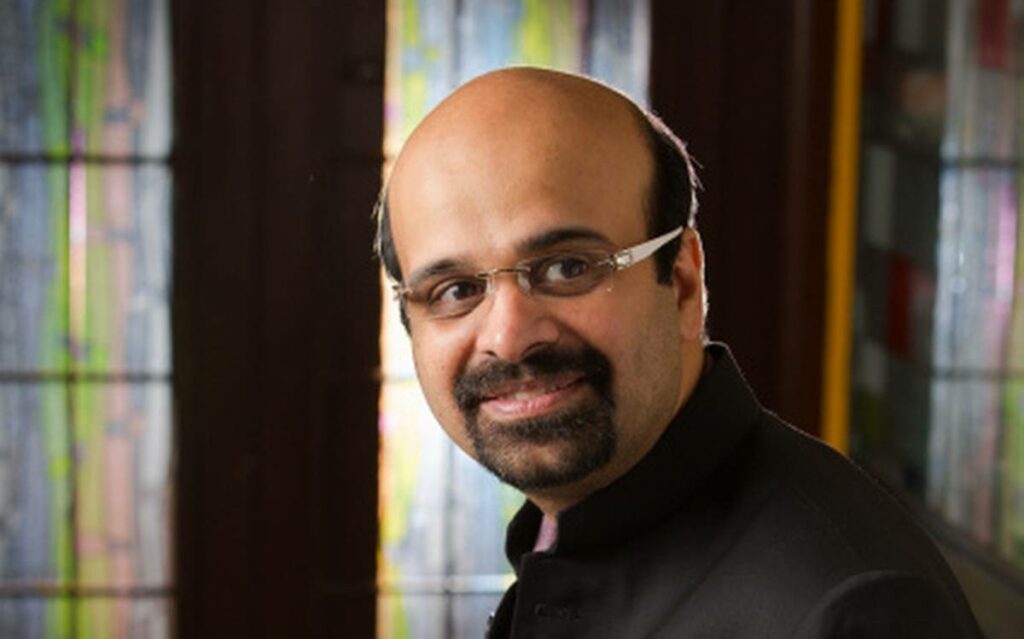
Triumphing over hatred and hardships, the community is rebuilding By Anil Srinivasan In the absolutely gorgeous first few scenes of Mani Ratnam’s Kannathil Muthamittal, we see the fragile beauty of a war-ravaged landscape and how love can blossom like a flower even amidst the morass of hatred. The film is of course set against the backdrop of the ethnic conflict in Sri Lanka. What seems to be more ephemeral, and almost a third wheel in this pictography, is the delicacy of AR Rahman’s score. It reminds, in a way, of music’s power to survive in the face of hatred, warfare and ethnic conflict. Music, specifically Carnatic classical music, has long been venerated and propagated among Sri Lankan Tamils and continues to be so. It is extremely interesting that certain rituals, including the ubiquitous arangetram ceremony (initiation of a student of music or dance to the performance stage), continues to be strictly adhered to by this community, now dispersed due to the unpleasantness of history. Every year, I get to be a part of the UK-based Milapfest’s annual summer school, a residential camp for Indian music and dance in north-western England held at the cosmopolitan Liverpool Hope University. Apart from the presence of some of the top names in Indian classical music and dance, the camp attracts a talented bunch of young people of British nationality. Many of them are of Sri Lankan descent, the generation next of a group of Sri Lankan Tamils who left their homeland following the civil war. This group in UK is among the nearly 1 million Sri Lankan Tamils dispersed across the world. Among them, Carnatic music triumphs as one of the more important identity markers. Seeking to re-craft their lives and identities, this displaced generation has ensured that all their children, regardless of religious background, are taught Carnatic music in some form – vocal or instrumental. The rites of passage, from the vidyarambham (or the “beginning” of a course of study in music) to the arangetram, are strictly observed by them. This community has also largely been responsible for organising, sponsoring and subsidising the growing interest in Carnatic classical music in their adopted lands – often inviting reputed artistes and professionals from South India to participate. Many times, the rigour with which these programmes are held reflect a deep-rooted sense of identification with a culture that is both ancient and evolving. And in all cases, this is a culture that embraces South Indian classical music. Powerhouse promoters classical arts It is both refreshing and at the same time surprising to hear Tamil spoken with classical clarity (including several words that are now obsolete in common parlance in Tamil Nadu). But more importantly, it is gladdening to see the intent and respect this community shows towards Carnatic classical music and classical dance. Separated by several thousand miles, but equally assiduous, are similar communities in Australia, Canada, pockets of the United States and all over continental Europe. The way they have rebuilt their lives in the face of hardships and yet preserved music as an integral identity marker is not only moving, but a living testament to tradition. In this context, there are individuals too, who have risen above challenges and emerged as powerhouses in promoting classical arts in local communities with tremendous impact. Aravinth Kumarasamy, of Apsaras Arts Singapore, who works closely with the National Arts Council of Singapore, has been responsible for a mini cultural revolution in the island nation. An accomplished veena player and dancer himself, he has taken on the mantle of organising several festivals that promote and conceptualise Carnatic music, including reinvigorating it through innovative uses in dance and theatre. He is now spearheading the proliferation of music and dance education in Southeast Asia. On a similar footing is the work of Anandavalli and her Lingalayam School of Dance, which has earned the celebrated dancer national recognition in her adopted home of Australia. Sivasakthi Sivanesan in the UK and Sivaganga Sahathevan in Melbourne are also prime examples of the live force that is now keeping Carnatic music vibrant in their respective communities. This, of course, is a small list of names. There are many more examples. All of them tremendously inspiring. In a context where extremism is trying to destabilise democracy, and where vested interests are using geopolitical games to divide people, the story of migrants who survived civil war and re-established a life celebrating the power of music is an important one in the narrative of world culture. It deserves to be noticed. Equally, in a context where we are now being forced to subscribe to the notion of what is and what isn’t “Indian culture”, the triumph of a group of individuals from our neighbouring nation in preserving South Indian classical music and dance sings a bold and inspiring raga indeed. Note : Original article appeared in Scroll.in, one of India’s most well-known news portals
Digital Events
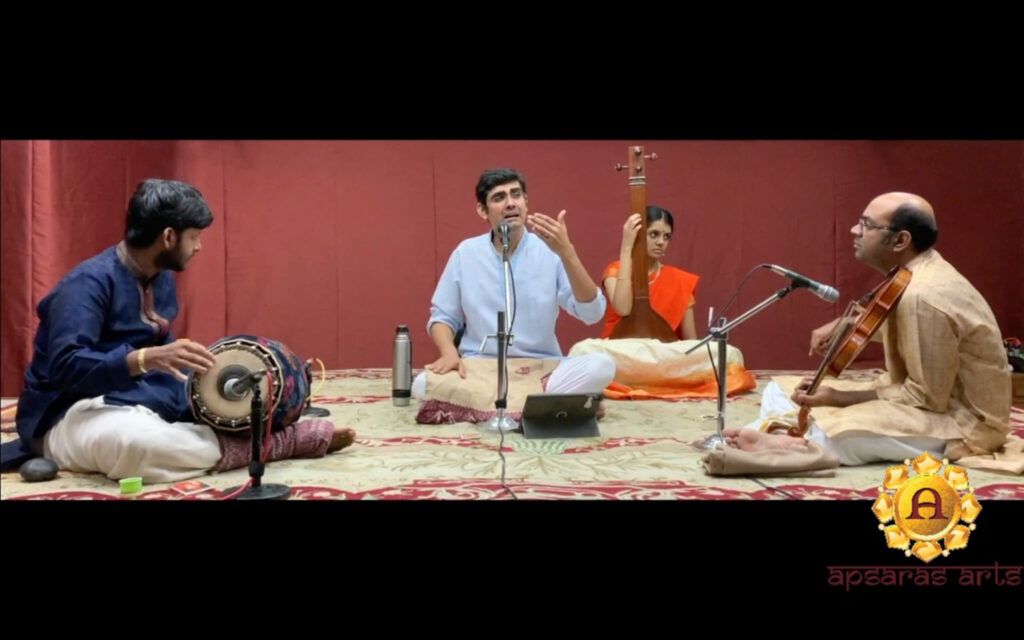
Digital Events December 2020-January 2021 season has been active with the digital performances featured at the Dance festivals and Music video releases in India and Singapore. Here is a round up and video links to the music and dance features: Nadopasana” (Worship through Music), a concert series that commemorates the birth anniversary of Apsaras Arts co-founder Shri S Satyalingam; Odissi International dance festival feature by Soo Mei Fei, as a budding Odissi artiste from Apsaras Arts Academy; Odissi recital by Soumee De, senior dancer and faculty from Apsaras Arts at Srjan’s “Anuvartanam- in tune with the times” and “Padam in Thodi” a music video premiered by Indian Raga Singapore in collaboration with Apsaras Arts. On December 22nd, 2020 “Nadopasana” (Worship through Music), a concert series that commemorates the birth anniversary of Apsaras Arts co-founder Shri S Satyalingam was premiered on Apsaras Arts digital stage, Avai. This inaugural digital Carnatic concert featured Sikkil Gurucharan on vocals, accompanied by V Sanjeev on violin, NC Bharadwaj on Mridangam and Sanjana Hari on Tampura. S Satyalingam (1930-2011) was an accomplished Carnatic vocalist having been trained at the acclaimed Kalakshetra Foundation, India where he learned from eminent teachers and leading stalwarts in the 1950s. A purist at heart when it comes to classical art forms, he had brought Apsaras Arts to international arts festivals in Singapore, Australia, Japan, Sri Lanka, United Kingdom and United States. He is remembered for his strict rigour in his teaching and is known as a perfectionist by his family and students and was tireless in presenting the best he could on stage and presented the highest standards in Indian classical music in Singapore. He contributed his expertise as a member of the Music Advisory Panel in National Arts Council, Singapore. For his contributions to the arts, he received the Viswakalaa Bharati Arts award in Chennai in 1995. Classical Indian arts were a lifelong passion for Sathyalingam and he is said to have insisted that his students continue with their performances while he was on his deathbed, lest funereal obligations unnecessarily mar and disrupt the audience’s expectations for a good show. This was an artistic commitment that Sathyalingam valued greatly. Watch this concert here: Click Here. On January 2nd 2021, Odissi International Biswa Odissi Utsav, Bhubaneswar featured solo recital by Soo Mei Fei, an Odissi student of Soumee De from Apasaras Arts Academy. She opened the 4th episode of the festival ringing in the new year 2021 through her rendition of Parvati Mangalacharan (which refers to an “auspicious beginning”) choreographed by Soumee De and composed by Chitra Poornima. This was followed by a Pallavi presentation based on raag Megh choreographed by Guru Ratikant Mohapatra. Watch the episode here: Click Here. On January 9th 2021, Srjan, Guru Kelucharan Mohapatra Odissi Nrityabasa presented an odissi solo recital by Soumee De, Apsaras Dance Company senior dancer and Odissi faculty from the Academy at the digital festival “Anuvartanam- in tune with the times.” Soumee opened the performance withVinaayaka Smaranam, a humble obeisance to lord Ganesha who is known by twelve names (Vakratunda, Ekadanta, Krishnapingakshya, Gajavaktra, Lambodara, Vikata, Vighnaraja, Dhumravarana, Bhalachandra, Vinayaka, Ganapati, Gajanana), music composed by Binod Bihari Panda and choreographed by her Guru Ratikant Mohapatra. This was followed by a delightful Pallavi, a pure dance that implies elaboration, set to Raag Kalyan and Taal Tripata, choreographed by legendary Guru Kelucharan Mohapatra and composed by Pandit Bhubaneswar Mishra. Kalyan Pallavi was choregraphed in 1959 and employs a significant innovation in dancer’s movement design and speed. Soumee concluded the recital with an Oriya abhinaya, Bhangi Chanha, which is a popular champu-kavya from Odia literary composition written by Kabisurjya Baladev Rath that is a combination of prose and poetry. This piece is sung by Radha’s sakhi (friend) describing Lord Krishna’s playful and inviting glances, his dark eyebrows, charming looks that sweeps her beautiful friend off her feet and urging Radha to clasp her hands around her neck and stay firmly planted on the ground, lest she is overwhelmed by the power of Lord Krishna’s loving charms. Watch the Odissi recital here: Click Here.On January 16th 2021, IndianRaga Singapore in partnership with Apsaras Arts Dance Company premiered on YouTube a beautiful musical ensemble rendering of “Padam in Thodi”. This Padam, performed by leading Carnatic vocalists in Singapore is from the repertoire of the legendary Veena Dhanammal school of music. This Padam was taught to the vocalists by renowned musician Dr S. Sowmya from Chennai, India, as part of the master class sessions at Dance India Asia Pacific 2020 organised by Apsaras Arts, Singapore in September. On listening to this rendition, Dr Sowmya remarked, “ My heart is filled to hear everyone sing in a harmonious chorus and I commend each vocalist for all the hard work put in and it has come out well.” The team includes: Creative Director: Aravinth Kumarasamy, Vocalists: Nithya Srinivasan, Rasika Viswanath, Shreevidya, Y S Shruthi Raj, Shruti Anand, Sreeranjani Muthu Subramanian, Srividya Sriram, Sushma Somasekharan, Vaishnavi Ananthanarayanan and Venkataramani Ramya. They were accompanied by Surup Sowmithri Thathachar (Violin) T Ramanan (Mridangam). Watch the performance here: Click Here.
AATHI, ANTHAM ILLAI
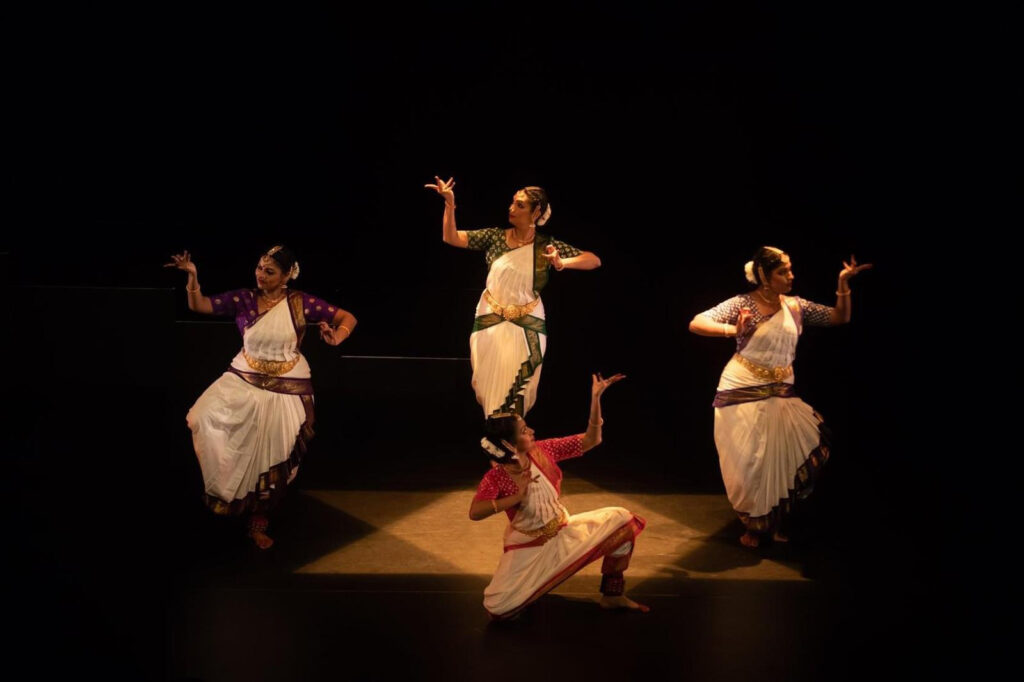
DIAP Residency Performance “Aathi Antham Illai – Journey Through Numbers”: a DIAP Residency performance was presented by Sreedevi Sivarajasingam of Omkar Arts & troupe from 16th to 18th January at Esplanade Theatre Studio as part of their “Raga” showcase. This production was mentored by Rama Vaidyanathan and guided by Aravinth Kumarasamy, music was composed by Sudha Raghuraman. In this production, the number system 0-9 to create a musical score and choreography using rhythmic patterns, lyrics and snippets from well-known Padams, Javelis, Ashtapathis. The team of dancers had to perform within safety distancing restrictions and presented over 5 sold-out shows receiving positive responses from a 250-strength audience. The DIAP Residency for local choreographers enables creative creation with experienced stalwarts to create unique shows that resonate with audiences and opportunities for local ensemble dancers to perform in notable productions.
Bharata Natyam
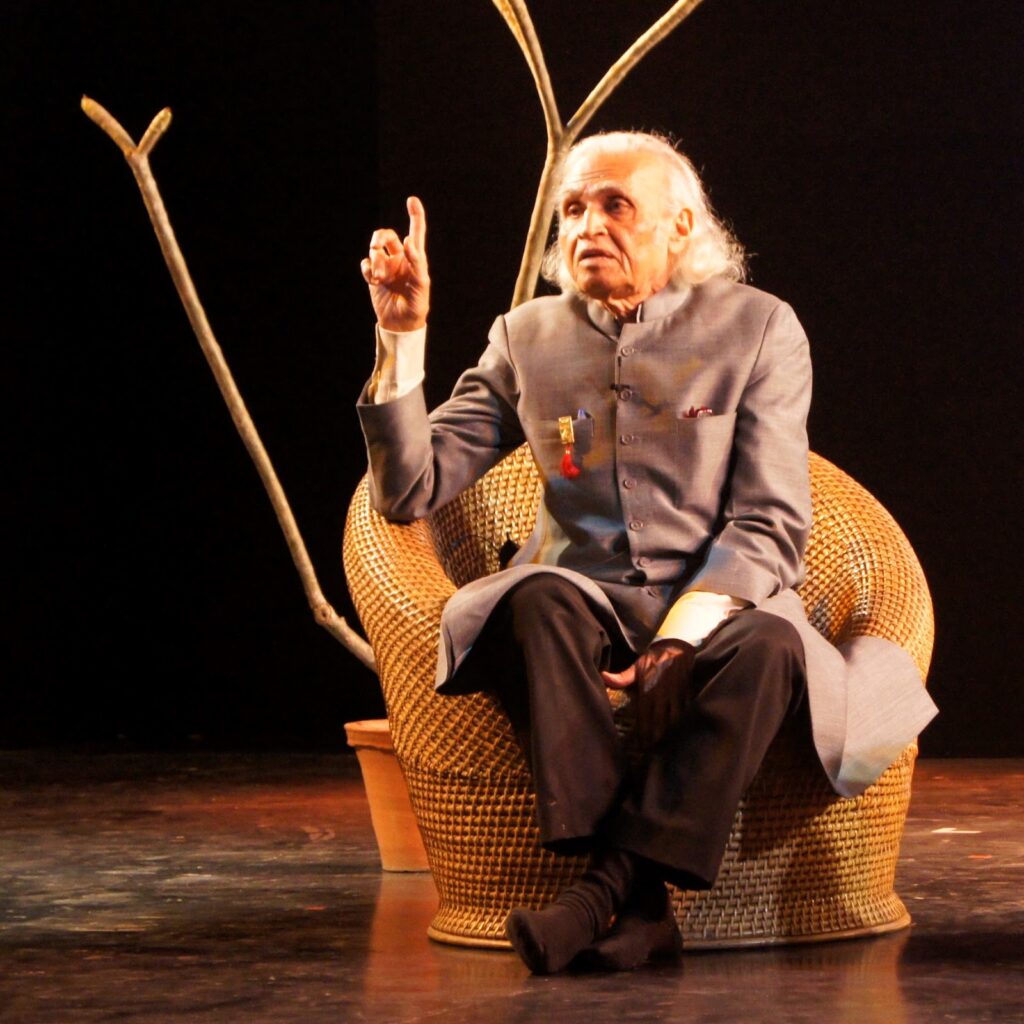
By Dr Sunil Kothari Synopsis Bharata Natyam, the most popular classical Indian dance-form, has received universal approbation as one of the subtlest expressions of Indian culture. Its intimate connection with the temple, as a ritualistic art, mirroring the imperceptible feelings of a devotee reflects the inwardness of Hindu culture. “Its amazing inner resilience has once again come to the fore. And thanks to some of the great gurus and performing artistes, a few dedicated visionaries, and pioneers, it has, after its initial revival some six decades ago, gained unprecedented popularity. “One of the most beautiful, subtle, sophisticated, and graceful dance-forms in the world, Bharata Natyam is performed according to the most delicate nuances of a musical piece, or a poem, through the vehicle of a body. Reflecting the principles laid down in the Natyashastra treatises, it has survived in India in all its variegated splendour of the form and moods which it has gathered unto itself throughout the centuries. Contents of the Book Preface 1. In praise of Bharata Natyam/Mulk Raj Anand. 2. Spiritual background/Rukmini Devi. 3. History roots, growth, and revival. 4. Nritta. 5. Dance Notation of Adavus/Padma Subrahmanyam. Nritya: 6. Hastas. 7. Abhinaya. 8. Margam repertoire: Alarippu to Tillana. Natya: 9. Bhagavata mela Nataka. 10. Kuravanji dance-drama. 11. Musical content/P. Sambamurthy. 12. Mysore school of Bharata Natyam. 13. Guruparampara. 14. Exponents. Dr Sunil Kothari 20th December 1933 – 27th December 2020 Dr. Sunil Kothari is a leading dance historian, scholar, author and critic, with 18 definitive works on dance to his credit. Dr. Kothari was Prof. and Dean, School of Arts and Aesthetics, JNU, New Delhi and Prof. and Head Dance Dept., Rabindra Bharati University, Kolkata, Fulbright Professor New York University, USA. He was dance critic of The Times of India group of publications for 40 years. He is roving critic of Sruti monthly and has his own column in dance portal narthaki.com.He also writes for The Hindu and Asian Age. He was based in New Delhi. Born in Mumbai on 20 December 1933, Dr. Kothari was a qualified chartered accountant before turning his focus to dance scholarship. His contribution as a dance writer and critic remains well documented in more than 20 books on the subject of Indian dance forms Bharatanatyam, Odissi, Chhau, Kathak, Kuchipudi, Satria and photo biographies of Uday Shankar and Rukmini Devi Arundale. Dr. Kothari received numerous titles and awards for his contribution to Indian dance forms, including the Sangeet Natak Akademi award (1995); the Gaurav Puraskar award conferred by the Gujarat Sangeet Natak Akademi (2000); the Padma Shri award bestowed by the Government of India (2001), and the Lifetime Achievement Award of the Dance Critics Association, New York, USA (2011). He was also an elected Fellow of Sangeet Natak Akademi for his contribution to Indian dance as a scholar. Dr Sunil Kothari, who was the first one to complete a PhD on Indian Dance was awarded the coveted Akademi Ratna by the Sangeet Natak Academy of India in 2018. Padmashri Dr Sunil Kothari has been visiting Singapore regularly since the 1980’s. In the recent decade, he was a regular speaker at the annual seasons of Dance India Asia Pacific and Samarpana Festival in Singapore. He has also been a friend of Esplanade Theatres on the Bay and Singapore International Arts Festival. He had been regularly writing reviews of performances in Singapore in leading publications.
Tribute to Dr Sunil Kothari
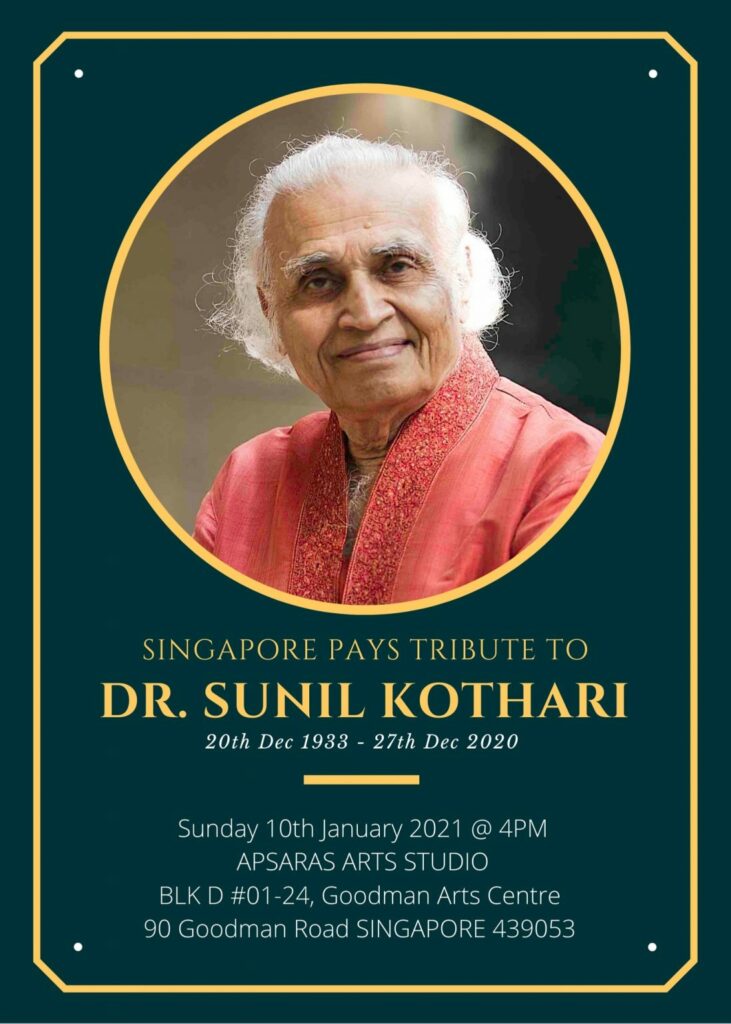
Welcome to AVAI – The Digital Performance Space by Apsaras Arts to share videos of performances, lecture demonstrations, Live Performance Streaming and more. AVAI will be officially launched in January 2021. Please stay tuned on our FaceBook and Insta page for updates. Singapore pays tribute to DR. Sunil Kothari Friends of Dr Sunil Kothari in Singapore pay tribute to him and celebrate his illustrious life and contributions to Indian classical dance. His Excellency Mr P. Kumaran, The High Commisisoner of India to Singapore, has kindly agreed to preside for this tribute. Live streaming on AVAI from Apsaras Arts at Goodman Arts Centre Singapore. Dance launching soon Lectures launching soon Live Stream launching soon Music launching soon
A Dance anthropologist’s perspective of “Agathi I Refugee”
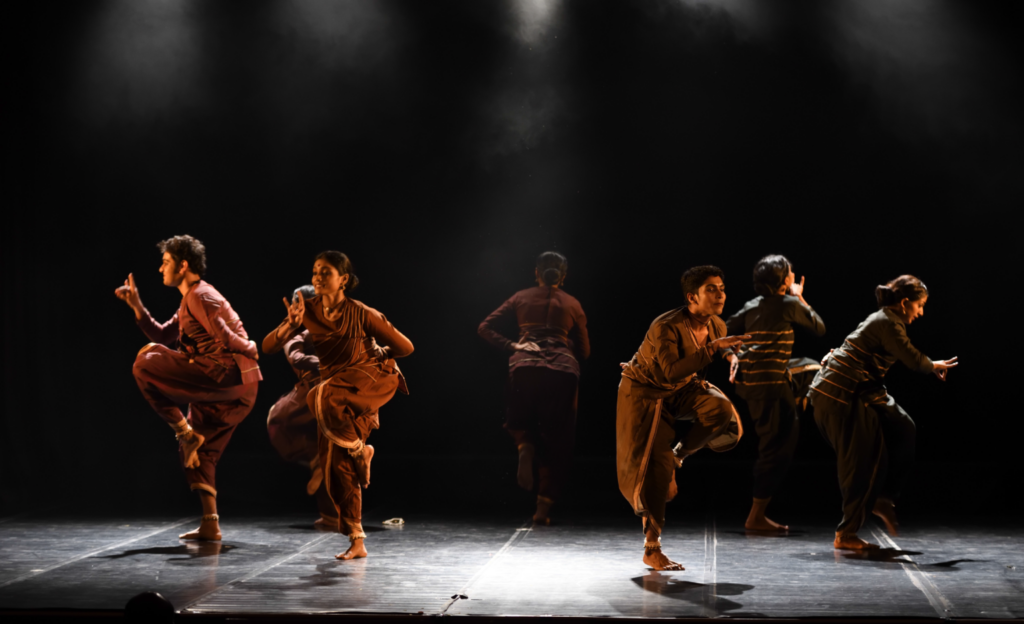
By Katherine C. Zubko, University of North Carolina Asheville “How does Agathi add to the history of performing on social themes? Let’s take a closer look at a few segments within one of the most poignant scenes in Agathi, a group dance production rendered in bharatanatyam I will refer to as the ‘boat scene.’ This boat scene is both rooted in recognizable bharatanatyam frameworks, as well as utilizes that familiarity to provide a bridge to expanding attention to difficult human experiences not typically seen in the dance form. The ‘potential of the arts to move our hearts and not just our minds,’ as one London audience member noted, allows Agathi to work towards defeating the asuras of apathy when it comes to this ongoing global refugee crisis. Read more on what Katherine C Zubko says about Agathi I Refugee experience. Bharatanatyam dancers spend most of their stage time inhabiting the movements of Hindu gods and their devotees, attending to the emotional subtleties of devotional relationships, as well as their powers of intervention. At any given moment, the focus may be on Yashoda’s affection for the often mischievous Krishna as a child or his later turbulent love relationship with Radha, while the next may reenact Shiva’s powerful cosmic tandava dance of creation and destruction, Durga’s heroic intervention in killing the buffalo demon, or Vishnu taking the form of any of his avatars to restore dharma, or righteousness to the world, all acts that demonstrate godly investment in cycles of worldly and human well being. The range of emotions is intended to reflect human and divine experience in depth. While bharatnatyam dancers have explored many other narrative and thematic threads outside of Hindu mythology, very few have employed the underlying techniques of movement, rhythm and rasa to the very contemporary realities of immigration and refugee experiences with performative and aesthetic integrity. During this past 2017-18 dance festival season in Chennai, Apsaras Arts’ production of Agathi: The Plight of the Refugees, caught my attention precisely because of its cutting edge contemporary topic performed during one of the most traditional, classical arts festivals, but also its efficacious use of ensemble choreography to deliver a powerful social message. As a dance anthropologist and scholar of bharatanatyam, I am particularly interested in what is created and experienced by dancers and audiences when embodied gestures and emotion transfers into unexpected contexts. What embodied expectations and resonances frame the possibilities for creative engagement, where do adaptations occur, how successful are they, and what effects does this have on the dynamic, evolving dance form and the dancers that embody it. My current quest examines how bharatanatyam dancers choreograph and perform on contemporary social issues, and Agathi will be the focus of one of the chapters of the book. Productions on social issues are nothing new within the history of dancers trained in the classical style of bharatanatyam. Mrnalini Sarabhai and her daughter Mallika, Chandralekha, Anita Ratnam, and Ananya Chatterjea have classical training, but each shifted into more multimedia, mixed-form or contemporary iterations of their own designs related to the treatment and experiences of women, environmental devastation and other topics. Other dancers have stuck closer to their classical techniques, including foundational mythological references as part of social commentary, such as Malavika Sarukkai’s production on Ganga, Leela Samson’s Nadi, and the Narasimhacharis’ Karuna Shakti. While artists engage in different levels of artistic license and activist commitments, the underlying reasons for such endeavors range from affirmations of the educational purpose of dance by the god Brahma found within the Natyasastra (1:108-116) to dancers’ feminist, social or ecological concerns. How does Agathi add to this history of performing on social themes? Let’s take a closer look at a few segments within one of the most poignant scenes in Agathi, a group dance production mostly rendered in bharatanatyam I will refer to as the “boat scene.” After performing a handful of vignettes that provide a window into some of the reasons people flee their homelands, from earthquakes and tsunamis, to fires and political violence, the stage goes dark except for a central spotlight. The urgent rhythm of the dancers’ feet underlie each individual emerging into the spotlight, depicting some component of fear in their lives, whether it is witnessing the horrors of human tragedy to others or being subject to harassment themselves. As the group comes together communally in a single line, they begin to call out for help, waving their hands, while also shielding themselves to the onslaught. There is a constant rhythm and rocking motion to this choreography, imitating the instability of the ground under their feet due to their circumstances, and foreshadowing the rocking of the boat they now call out to with their hands. Jumping into the boat one by one, the dancers hold onto the sides, some feeling sick, others crossing their arms over themselves with wide-open eyes, and one mother holding a baby trying to steady herself and anxiously trying to calm the child. All but the mother rise and clasp hands, morphing into the oblong shape of the boat surrounding the mother and child. Rocking, leaning, tilting high on one side and then the other, the people-boat navigates the rough waters. Hands unclasped, the boat turns back into individual people, being tossed around as the dancers roll into each other on the ground, eventually showing distinct moments of sickness, fear and anxiety. As I want to refrain from giving away the climactic moments of this scene, let me stop this description and discuss some analytical points. Without any lyrics, the experience of the refugees relies on mood, rhythm and embodied storytelling. First, the use of rhythm produced communally, in the midst of individual experiences of terrified people, points to a more universalized problem – while each refugee is experiencing their particular context, the tragedy is a more globalized human problem. Accompanying this intense thisra (3 beat) rhythm, is a second focus point created through the facial expressions, gestures and postures that evoke the rasa, or aesthetic mood,
Travel memories from the ASEAN India Youth Summit at Guwahati, India
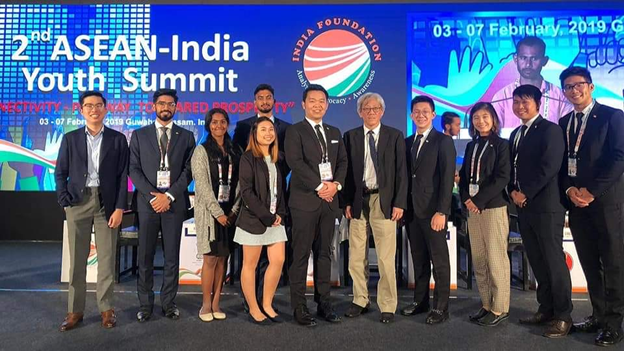
By Soo Mei Fei As Mei Fei recalls her experience at the ASEAN Youth Summit 2019 held at India, two years on, she finds herself still pondering about dance as the bridge that connects. “It is never an ending point, but a starting point that branches out to various paths. It is a journey that is simultaneously unique, and yet in some sense, universal.” I rushed home from my Odissi performance at the Artwalk Little India festival, grabbed my luggage, and headed off to the airport! That was how my trip to the ASEAN- India Youth Summit in Guwahati, Assam began from 3rd to the 7th of February in 2019. On this trip, I was accompanied by 8 other delegates from various walks of life – youth who were studying and working in various sectors in Singapore. I remember thinking to myself: what does a dancer do in a conference like this? What is the role of dance (or any art form), when considering global connectivity, diplomatic relations, economics, and all the other areas of life that seemed (to me, at that time) so far removed from art? I found my answer during this trip: 2 simple words – art connects. Art is the bridge between two: two strangers, two generations, two cultures, two countries, and the list goes on. My introverted self struggled to find a way to connect with others at the conference, yet when I introduced myself as a dancer, I quickly found myself in conversations about dance – memories, experiences, and a wonderful exchange around dance. And I wondered about the role of Bharatanatyam – which is still heavily seen as a “traditional” “ethnic” art form to the majority in Singapore, and finding less support than art forms that are considered “contemporary”. I raised the question at a panel discussion: how do we ensure that “traditional” art forms continue to grow and prosper, in the world today? Ambassador Pham Sanh Chau very eloquently put it across: preserving an art form and viewership are two different things. It was such a simple idea but to me it felt like a huge paradigm shift. In passing on an art from one generation to the next, we build bridges that give access, and open new pathways. Two years on, I find myself still pondering about dance as the bridge that connects. It is never an ending point, but a starting point that branches out to various paths. It is a journey that is simultaneously unique, and yet in some sense, universal.
A conversation with Devapriya Appan, Senior Company Dancer
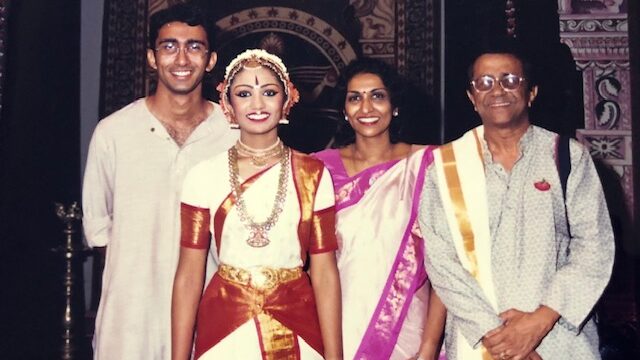
By Vidhya Nair “There are no formulas. When we don’t have time, we need to make time. Prioritise. Rearrange. Dance was something I wanted to do for a long time, then I realised that I need it to remain balanced. It’s an important part of having balance, a means to find happiness.” Read more about Devapriya, Senior Company Dancer who is performing in Agathi I Refugee this April on her dance journey. VN: Introduce yourself to us Priya. Tell us a little about your background. DP: I’m a Singaporean Indian, 2nd-3rd generation. My mother’s parents had emigrated from Malaysia. My father was born in Malaysia but returned to India during the Japanese Occupation. He returned to Singapore to work after he completed his Engineering studies in the 1960s. My father till his retirement was a university lecturer in Singapore and my mother is a doctor in private practice. I grew up with my elder brother. I had studied medicine in Melbourne and was interested in working with children and adolescents so was initially posted to Singapore General Hospital and KK Women’s’ & Children’s’ Hospital in paediatrics before I moved to specialising in psychiatry at the Institute of Mental Health (IMH) where I’m based now. My husband is a doctor and we have two sons aged 7 and 3. VN: How did you get introduced to Bharatanatyam? DP: I joined Apsaras Arts at the age of 6 years at Cairnhill Community Centre under Mohana Harendren (Neila Mami’s eldest daughter). My parents were keen for me to learn as my mother had learned the Veena as a child and many in my father’s family had learned Carnatic music. I recall speaking only Tamil till the age of 4 at home. As a student at Swiss Cottage Primary, after school either my parents or brother would take me for classes. Classes were a lot of fun. I attended many birthday parties and many of the girls I met in dance class continued to be friends even in my secondary school at Raffles Girls (RGS). I was part of “Little Angles “– a children’s’ multi-ethnic dance troupe created by Neila Mami, Mdm Som Said and Mdm Yan Choong Lian in the early 1990s. [ This was an offshoot inspired by the National Dance Company which had closed down in 1985 due to lack of funds]. In 1995, when I was in Primary 5, I travelled to Paris with the troupe and we all had to learn elements of Malay & Chinese dance along Bharatanatyam and we performed there. It was during school term time but my parents allowed me to participate. This was the first time I got to be trained by Mami. Back then, Mami was the feared one, the one taking our exams. Her demeanour seemed scary and imposing. She had a strict persona. During the Paris trip, my fear dissipated as she was very engaging and protective. By Secondary 1, I started to take individual classes with Mohana akka in preparation for my Arangetram. Mami taught me personally several items of my repertoire – the Pushpanjali, Varnam and the Kirtanams. It was an eye-opening experience. My arangetram took place on 3 July 1999 at Jubilee Hall, Raffles Hotel. I was 15. It was an exciting night for me and I also sang part of my kritanam, ‘Kurai ondrum illai’. The few months leading up to the event was exhilarating and stressful. My parents were worried when they saw that I had lost so much weight and was coping with pains from physical injuries and it was quite daunting, managing school and dancing to live music to an audience. My fondest memories of that time were the evening practice sessions at Mami’s house on Meiyappan Chettiar road. It felt like a Gurukulam. Like I was living there too – spending lots of time with both Mama and Mami who would insist I have my meals there. It made me feel independent and consider dance as a serious pursuit. VN:What was your relationship like with Neila Mami? DP: I was one of the few medical students learning dance with her. Her students each had their individual relationship with her but I would get all the medical questions. Sometimes you wouldn’t understand in which context she asked her questions. She would say, “Why da? Why does this person have this sickness?” She liked asking me for medical advice and would be playful when I was watching over her food habits remarking to others, “She won’t let me take it, da… She’s very strict!” She was supportive of my decision to be a doctor. I remember being introduced to famed dancer Dr Padma Subramanyam in India as a medical student. She was mostly concerned about me continuing to dance. She was not one to meddle in your choices. I recall asking her why she was not encouraging another student also in medicine to not discontinue and she said, “No da, she’s different. I know you will continue.” She had the ability to allow you to learn from others and often made the learning happen. She helped me organise lessons while I was studying in Melbourne. I learned from Chandrabanu in Melbourne and later in India where I also did a year of research, I learned from a teacher in Vellore and spent a month in Bangalore learning from Kiran Subramanyam & Sandhya Kiran. The teaching there was very different. I learned many new aspects of choreography, listened to new music. When I returned, I had to show to Mami what I had learnt and taught it to others (e.g., the Thillana I learned in Bangalore was taught to my peer, Loga who performed it for her arangetram). Mami also challenged me, often giving me more than I would think I’m capable of. Three months after I had my older son, Mami cast me in a production and was confident that I could do it. I would prefer group ensemble work but she would encourage me to take up main character roles and do